
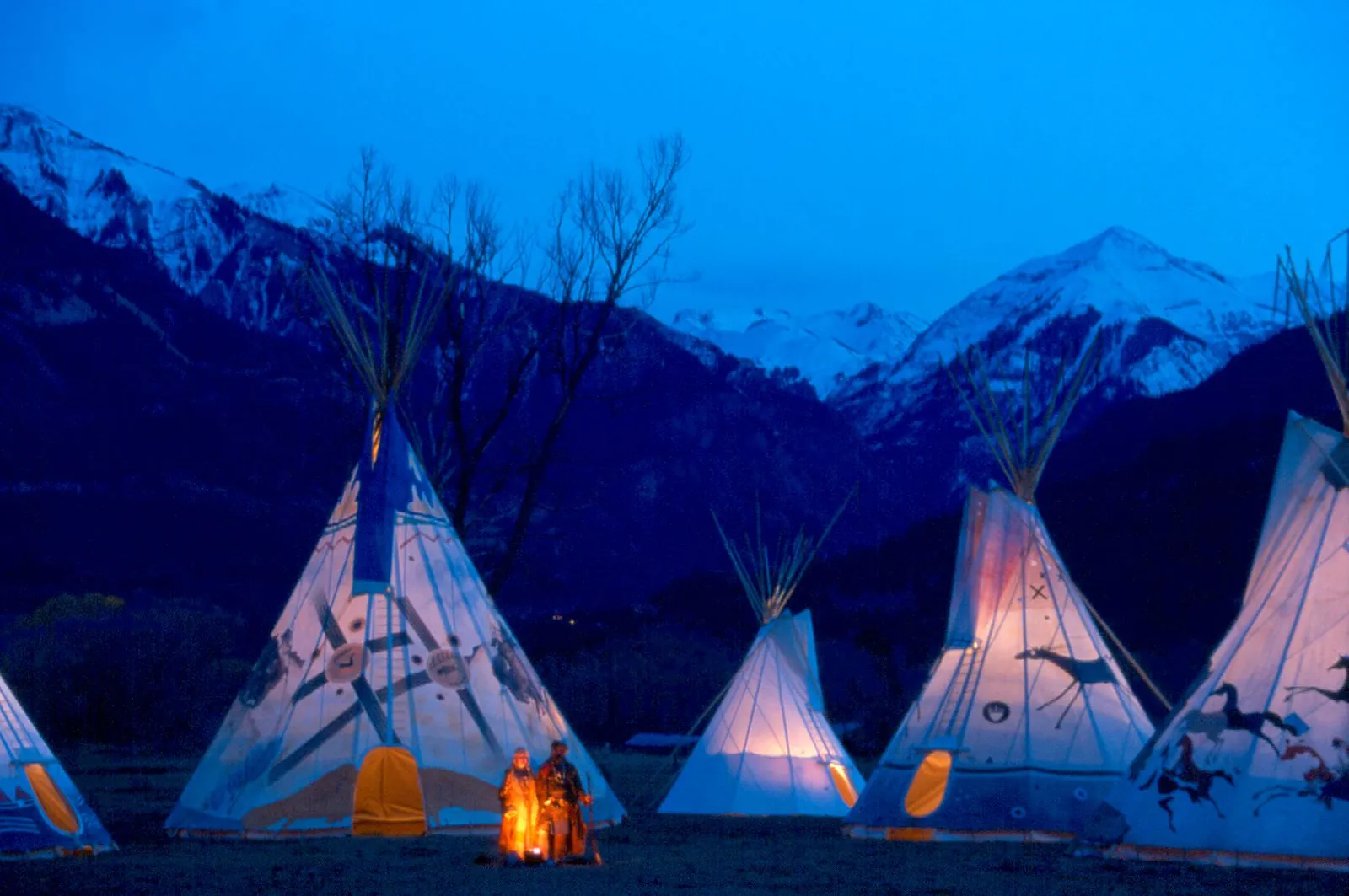
Quick answer: To buy the right tipi, decide five things in order: the size (Secret Creek tipis come in 12', 16', 18', 20', 24' and 28' diameters, from about 110 to 615 square feet), the canvas for the cover, the entrance style, how you will anchor it, and whether you need poles, a liner and an ozan. A tipi cover includes your choice of fabric and door, lacing pins, ropes, a storage bag and an install guide. Poles, liners, ozans and ground attachments are separate choices. If you plan to have a fire inside, choose a flame-retardant liner, because the liner is what makes a tipi draw smoke and stay warm.
Whether you are shopping tipis for sale for a backyard, a family camp, a retreat or a glamping site, this guide walks through each decision using the options in the tipi builder.
What Should You Know Before Buying a Tipi?
A tipi is a cone of long poles wrapped in a canvas cover, with two adjustable smoke flaps at the top and a door at the front. It is one of the simplest shelters you can buy, but a few points are worth knowing up front:
- A tipi is a seasonal or semi-permanent shelter, not a building. Earthworks Tipis are not engineered for snow or wind loads. They must be pitched according to the instructions, with proper hardware at every attachment point, to limit fabric movement.
- The cover is only part of the purchase. You will also need a pole set (or your own poles), a way to anchor the tipi, and, for real comfort, a liner.
- Set-up is a learnable skill. A smaller tipi can typically be set up by one person in 1 to 3 hours, while medium and larger sizes take about 2 to 4 hours depending on size and options.
If you are still deciding between shelter types, read our tipi vs. yurt comparison or the broader guide to yurt tents vs. canvas tents vs. tipis first.
What Size Tipi Should You Buy?
Tipi size is measured by the diameter of the floor circle. Secret Creek builds six standard tipi sizes:
| Tipi size (diameter) | Approx. floor area | Typical sleeping capacity |
|---|---|---|
| 12' | 110 sq ft | About 2 to 5 people (12'–16') |
| 16' | 200 sq ft | About 2 to 5 people (12'–16') |
| 18' | 250 sq ft | About 5 to 8 people (18'–22') |
| 20' | 300 sq ft | About 5 to 8 people (18'–22') |
| 24' | 450 sq ft | About 8 to 16 people (24'–28') |
| 28' | 615 sq ft | About 8 to 16 people (24'–28') |
Capacity depends on how you furnish the space: beds, seating and a fire use far more floor than sleeping pads. Because the walls slope inward, standing room is smaller than the floor area.
In general, 12' and 16' tipis suit a couple or small family, 18' and 20' are versatile family and guest sizes, and 24' and 28' are gathering spaces for groups and events.
For commercial projects, 18' to 20' tipis are typically used as intimate guest accommodations, while larger tipis become event spaces and gathering halls. See commercial tipis for multi-unit projects.
Which Canvas Is Best for a Tipi Cover?
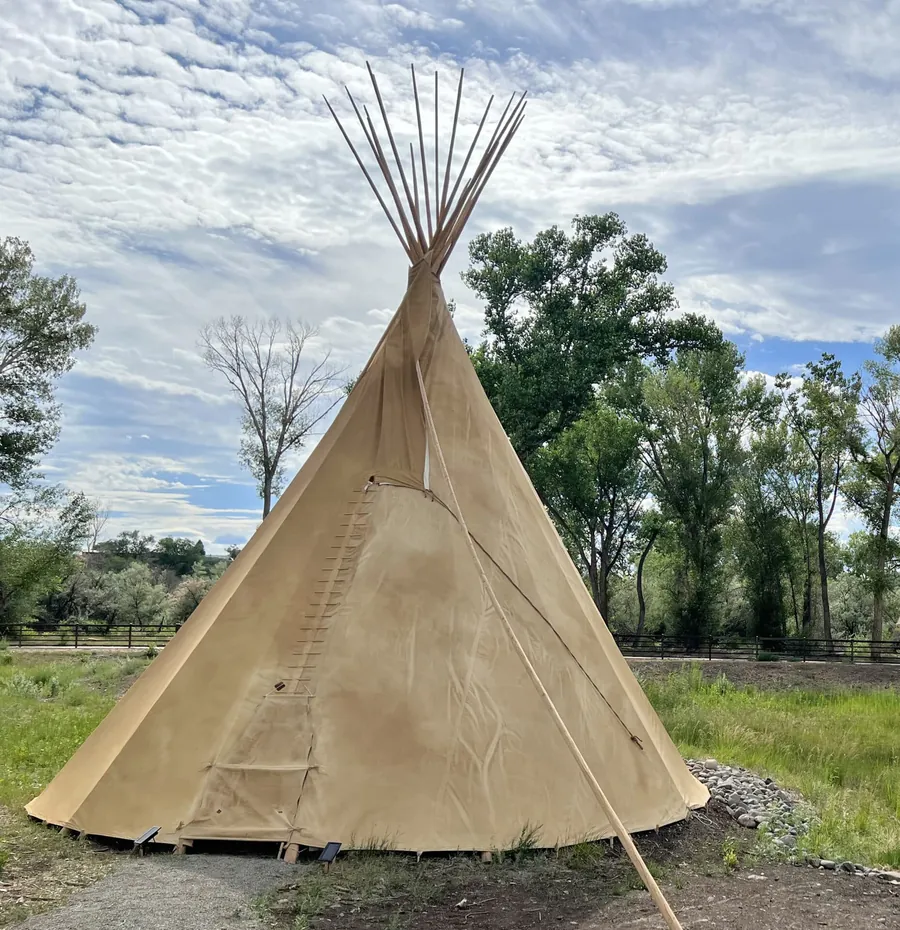
The cover is the heart of the tipi, and the fabric you choose affects weight, durability, fire safety and how long the cover will last. Current cover options include:
- 10 oz Non-Flame Retardant: 100% cotton marine Sunforger canvas that is water-resistant, breathable and naturally mildew-resistant. The lightest option, good for occasional use where fire codes do not apply.
- 10 oz Flame Retardant: the same 100% cotton marine Sunforger canvas with flame-retardant treatment. A sensible default for most buyers, and often required for events and commercial use.
- 15 oz Flame Retardant: the heaviest 100% cotton marine Sunforger canvas, flame retardant, water-resistant, breathable and naturally mildew-resistant. Available while supplies last.
- Timberline: the heavy-duty option, a 15 oz cotton/polyester blend with an acrylic coating that is flame, water and UV resistant with a mildew repellent.
How do you choose between them?
Consider how long the tipi will stay up and how much sun it will see. A few weekends a year? 10 oz canvas does well. Up all season or at a busy guest site? Choose heavier canvas or Timberline. If people will gather around a fire, or a venue or permit office will ask about fire safety, choose a flame-retardant fabric.
Every cover includes your choice of fabric and door, wooden lacing pins, ropes, a tipi storage bag and an install guide.
Which Tipi Door and Entrance Should You Choose?
The entrance changes how a tipi feels to use every day, especially if you are going in and out often or hosting guests. The options are:
- Standard Entry: the traditional tipi entry with a matching canvas door cover.
- Arched Entry: an arched opening with a matching canvas door cover and no lacing pin connection at the bottom of the door.
- Oversized Entry and Oversized Arched Entry: larger versions of the traditional and arched entries, for easier access. Not available on 12' and 14' tipis.
- Oversized Zipper Entry: a 78" tall zippered entry with buckles to hold the door flaps open. Not available on 12' and 14' tipis.
- Full-Size Locking Door: available on 24' to 28' tipis, with a half-light window and an enclosed vestibule. The best choice when you want a more secure, cabin-like entrance for guests.
What Kind of Tipi Poles Do You Need?
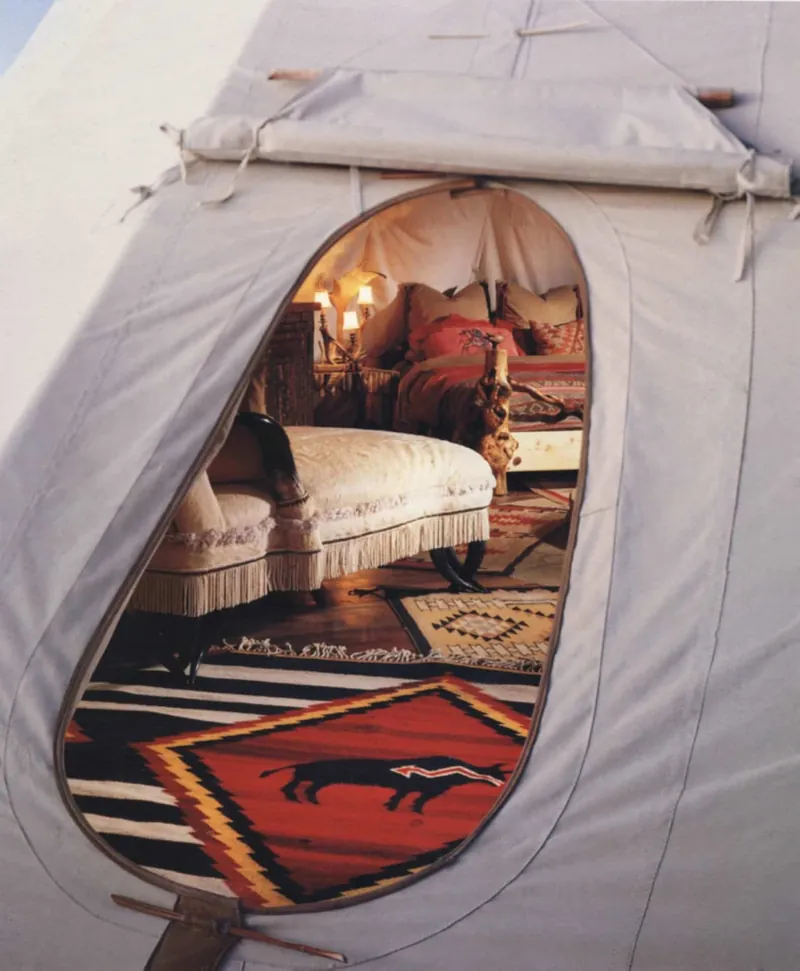
Poles are the frame of the tipi, and they need to be long, straight, strong and smooth. The Secret Creek tipi pole set is made of peeled lodgepole pine poles, drop-shipped from the pole yard. You can also choose the cover without poles if you already have a set or plan to source your own.
If you supply your own, make sure the poles are long, straight and smooth, and dress any rough tips so they do not abrade the canvas.
Setup starts with a tripod of three poles that sets the height and pitch. The remaining poles are added in a specific sequence, then the cover is lifted, wrapped around the frame and closed at the front with lacing pins. Our tipi pitching instructions include the full step-by-step guide.
Do You Need a Tipi Liner and an Ozan?
Yes, if you want to spend real time in your tipi. A liner is a canvas wall hung inside the poles. It insulates the tipi and controls airflow. When you have a fire, the liner and the outer cover work together to create a chimney effect that draws smoke up and out through the smoke flaps. Skipping the liner is the most common reason a tipi feels cold and smoky. Liner options are sized to the tipi:
- 6' interior liner: recommended for 12' to 22' tipis. Choose the flame-retardant treatment if you will have a fire pit.
- 9' interior liner: recommended for 24' to 28' tipis, and not available for 12' to 16' sizes. Again, choose the flame-retardant version if you will have a fire.
An ozan is an interior drop ceiling that catches condensation and channels it down the liner, adding weather protection and holding warmth over the living area. The traditional ozan and the extended ozan both include flame-retardant treatment. The extended ozan is not available for 12' and 14' sizes.
Can You Have a Fire Inside a Tipi?
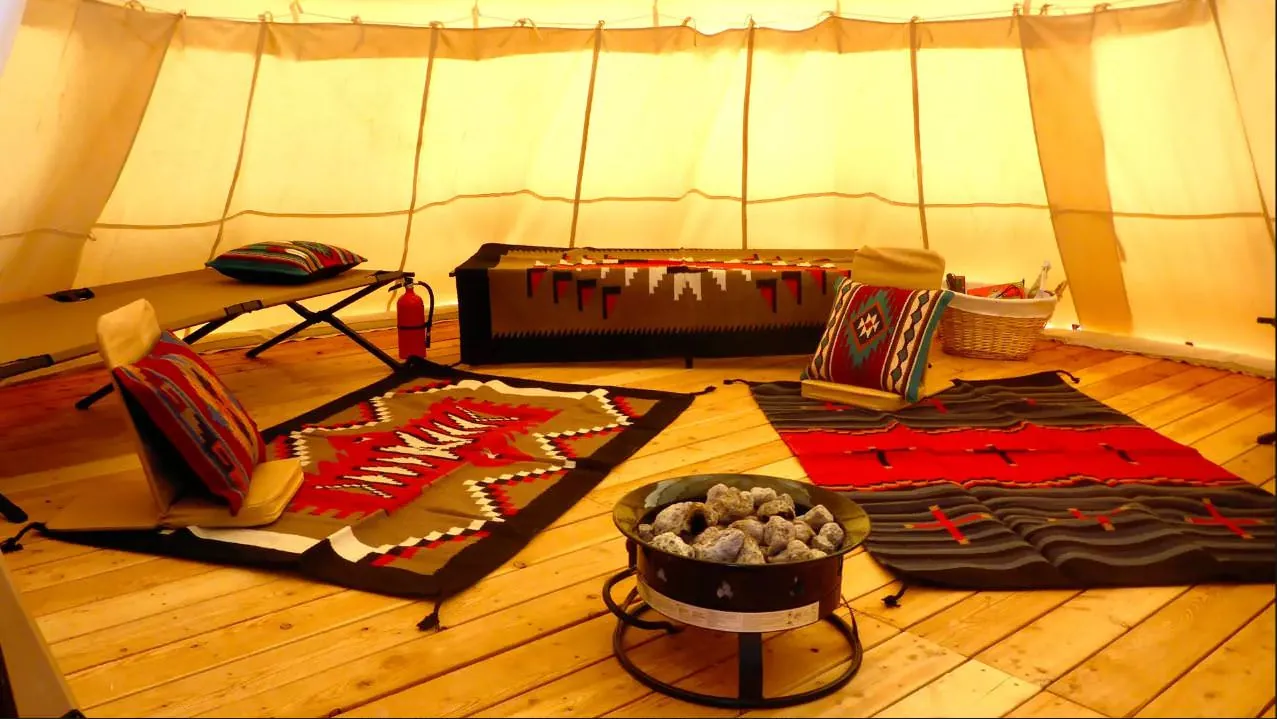
Yes. A fire is one of the great pleasures of tipi living. The fire pit should sit just forward of the center of the tipi so it is under the smoke opening. You then adjust the smoke flaps, more open or closed and more into or away from the wind, to draw smoke out. Think of the smoke flaps as the collar of a coat, angled to shelter the opening from the wind.
A liner is essential with a fire, and flame-retardant fabrics are the safer choice. Always follow local fire rules.
How Should You Anchor a Tipi?
How you secure your tipi depends on where you will pitch it. Ground attachment options are:
- Wood stakes: traditional wooden stakes for soft, grassy or lawn-type ground.
- Steel stakes: heavy-duty stakes for maximum hold, best on hard or rocky soil.
- Deck kit: attachment hardware for a permanent installation on a platform.
Choose a site that drains away from the cover and stay clear of dead limbs overhead. A platform keeps the floor dry and level for a tipi that stays up all season. A heavy-duty 13 oz flame-retardant floor cover is available as an accessory.
Can You Get a Painted Tipi?
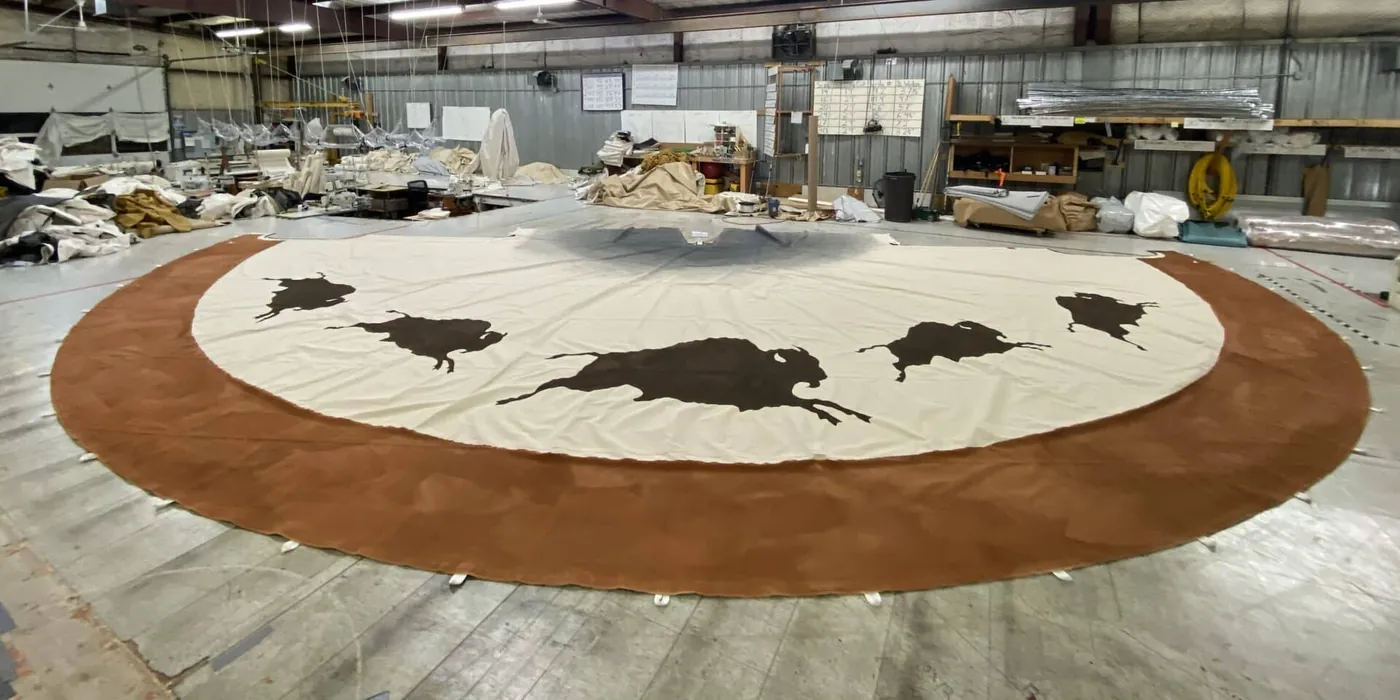
Yes. Tipis can be hand-painted by an in-house artist, with ready-to-choose full tipi designs such as Mustangs, Mountain Raven, The Hunt, Canyon Wall, Flying Free, Two Become One, Falling Stars, Bison Herd and Forest Lodge. You can also paint your tipi yourself. Browse the tipi inspiration gallery for ideas.
Should You Buy a New, In-Stock or Used Tipi?
A new custom tipi lets you choose every option, which matters when you need flame-retardant fabric for events or a locking door for guests. In-stock and gently used tipis and liners are sometimes available in the tipi shop; they are ready to ship or pick up but cannot be customized.
How Do You Care for a Tipi After You Buy It?
Stretch and secure the cover properly, because excessive fabric movement, or "wind whip," wears the cover and can deform the frame. Never store a cover damp; store it completely dry, in a ventilated area, away from rodents. A canvas repair kit with matching canvas and adhesive handles quick on-site fixes.
Our season-by-season tipi setup and care guide and tipi maintenance tips cover this in detail.
Tipi Buying Checklist
- Size: 12', 16', 18', 20', 24' or 28', based on how many people will sleep or gather inside.
- Cover fabric: 10 oz, 10 oz flame retardant, 15 oz flame retardant or Timberline.
- Entrance: standard, arched, oversized, zippered, or a full-size locking door on 24' to 28' tipis.
- Ground attachment: wood stakes, steel stakes or a deck kit.
- Poles: a peeled lodgepole pine pole set, or your own.
- Liner and ozan: a 6' or 9' liner sized to your tipi, flame retardant if you will have a fire; add an ozan for condensation control and warmth.
- Extras: painting, floor cover and canvas repair kit.
Ready to price your options? Build your tipi online, explore Earthworks tipis, read the tipi FAQs, or request a consultation with a Sales Guide. Planning a guest site? Our glamping business plan template covers tipis, yurts and tents, and the tipi camping lifestyle guide shows what living in a tipi is really like.
Frequently Asked Questions
What size tipi do I need?
Choose by how many people will use it. Tipis from 12' to 16' typically sleep about 2 to 5 people, 18' to 22' about 5 to 8, and 24' to 28' about 8 to 16, depending on how you arrange beds and furniture. Secret Creek tipis range from about 110 sq ft (12') to 615 sq ft (28').
What is included with a tipi cover?
Each tipi cover includes your choice of fabric and door, lacing pins, ropes, a tipi storage bag and an install guide. Poles, a liner, an ozan and ground attachments are chosen separately.
What is the best canvas for a tipi?
It depends on use. 10 oz cotton marine Sunforger canvas suits occasional use. Flame-retardant canvas is the better choice for fires, events and guest sites. Heavier 15 oz canvas or the coated Timberline fabric suits tipis that stay up for long seasons in strong sun.
Do I need a liner in my tipi?
For comfort, yes. A liner insulates the tipi, controls airflow and, with a fire, creates the chimney effect that draws smoke out through the smoke flaps. Use a 6' liner on 12' to 22' tipis and a 9' liner on 24' to 28' tipis.
Can a tipi be used in winter?
A tipi can be used in cold weather with a liner, an ozan and a fire, but Earthworks Tipis are not engineered for snow or wind loads. Pitch it correctly, keep snow brushed off the cover, and take it down and store it dry for long absences.
How long does it take to set up a tipi?
A smaller tipi can typically be set up by one person in 1 to 3 hours. Medium to larger sizes take about 2 to 4 hours depending on size and options. Detailed instructions are included with every tipi.