
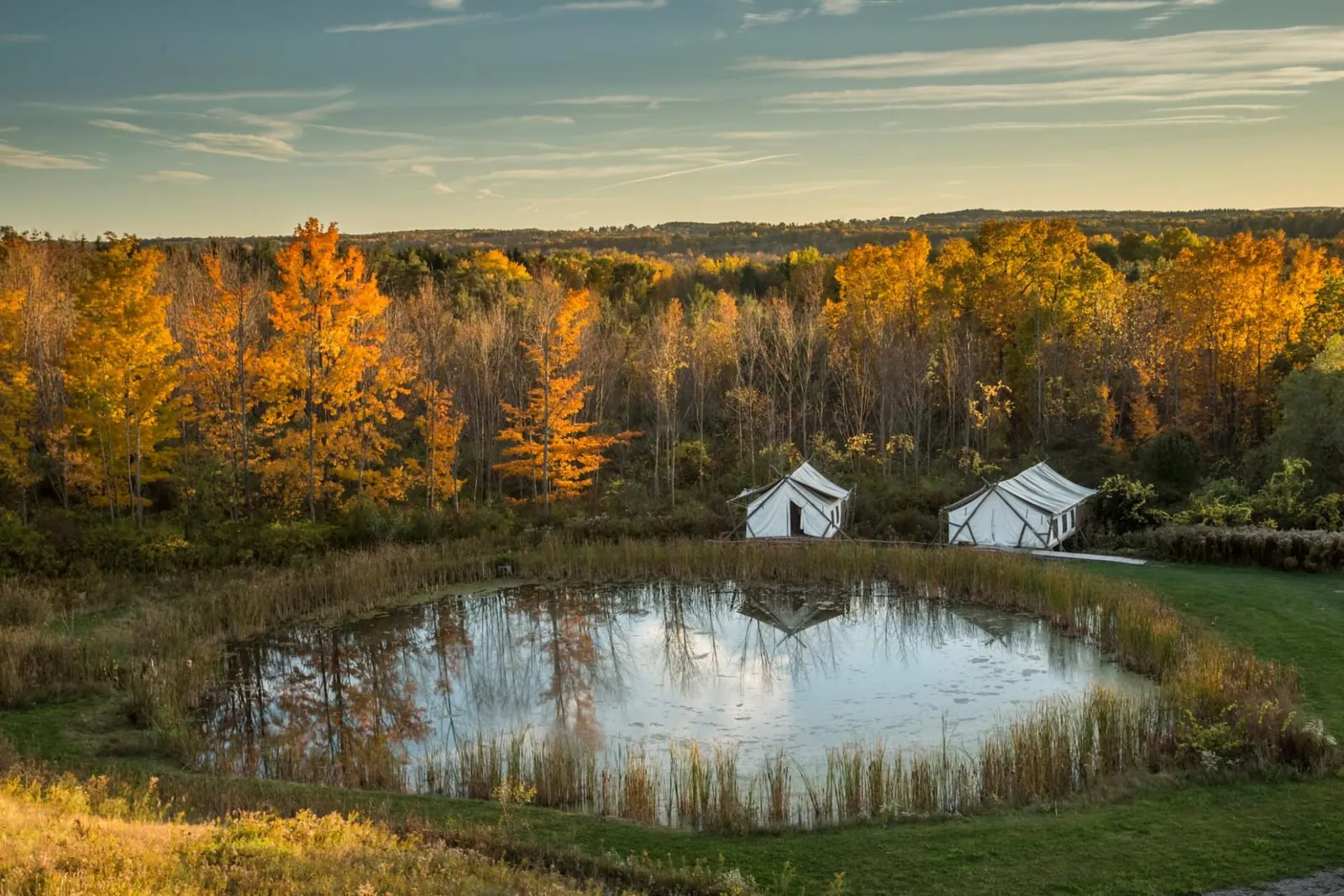
Quick answer: A glamping business plan is a written roadmap that proves your site can attract guests, cover its costs and pay back the money it takes to build. A strong plan has nine parts: an executive summary, your concept and target guest, market research, a unit mix (how many yurts, tipis and canvas tents, and which sizes), a startup cost budget, a revenue and break-even model, permits and land use, operations and marketing, and a financing and launch timeline. Mixing structure types is one of the most useful choices you can make in the plan, because yurts, tipis and canvas tents sit at very different price points and guest experiences.
Below is a fill-in template. Replace every bracket, like [Your nightly rate], with your own research; occupancy and rates depend on your location, season and guest, so we do not invent them. The structure prices and sizes are current Secret Creek figures you can use as real inputs.
What Should a Glamping Business Plan Include?
Lenders, investors and planning departments want evidence you have thought the business through. Use these nine sections as your outline.
| Section | What it answers |
|---|---|
| 1. Executive summary | What are you building, for whom, and what do you need? |
| 2. Concept and guest | Why will people book you? |
| 3. Market research | Is there demand at your price? |
| 4. Unit mix | Which structures, sizes and how many? |
| 5. Startup costs | What does it cost to open? |
| 6. Revenue and break-even | When does it pay for itself? |
| 7. Permits and land use | Can you legally operate here? |
| 8. Operations and marketing | Who runs it and how do guests find you? |
| 9. Financing and timeline | How is it funded and when do you open? |
How Do You Write the Executive Summary and Concept?
Write the executive summary last, but put it first, on one page. A fill-in version:
- Business: [Business name] is a [number]-unit glamping site on [acreage] acres offering [yurts / tipis / canvas tents] for [couples / families / groups / retreats].
- Season: Open [year-round / months], with [number] bookable nights per unit per year.
- Guest: Our primary guest is [who], traveling from [where] for [why].
- Edge: We stand out because [unique structures, views, amenities, activities].
- Ask: Total project cost is [total], funded by [owner equity] and [loan or investor amount].
The concept section then defines the experience: couples' retreat, family campground upgrade, event venue with overnight stays or wellness retreat. That choice drives your structure mix and bathroom plan. For ideas, see Yurt Glamping: How to Design a Guest Stay People Book Twice.
How Do You Research Your Glamping Market?
Lenders care more about local evidence than borrowed national statistics. Gather it yourself:
- Comparable stays: List [8–12] unique stays within [drive time] of your land, with structure type, capacity, amenities and weekday, weekend and peak rates.
- Booking calendars: Note how far ahead they book and which weekends sell out.
- Demand drivers: Parks, trails, lakes, wineries, ski areas and event venues nearby.
- Reviews and gaps: List competitor complaints (cold nights, shared baths, noise) and missing options (year-round, group or event stays). Your unit mix should fill them.
Cite and date every figure. A short table of real comparables beats a page of generic growth claims.
Which Glamping Structures Should You Choose: Yurts, Tipis or Canvas Tents?
A mixed site gives you an advantage, because each structure plays a different role, and Secret Creek builds all three. For a deeper comparison, read Yurt Tents vs. Canvas Tents vs. Tipis.
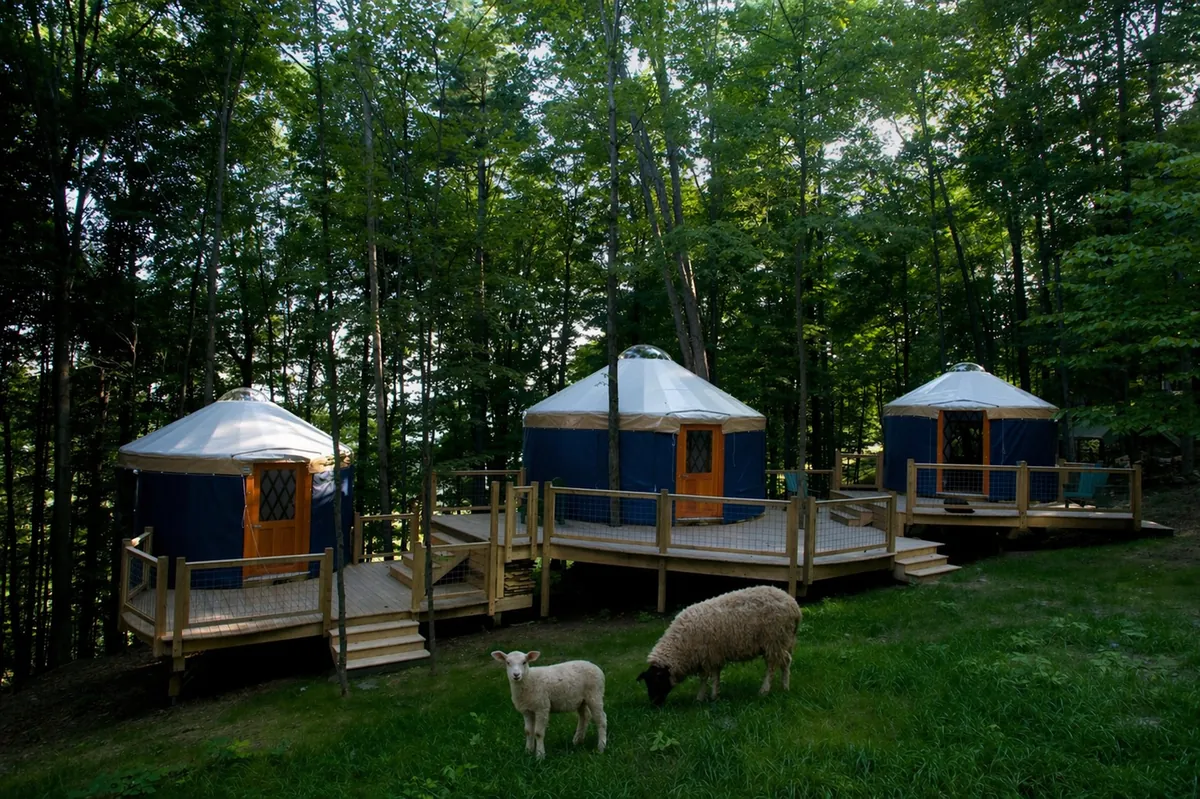
- Yurts are premium, four-season units. Insulated walls and roof, French doors and operable windows suit year-round stays and en-suite baths. 20' and 24' are the most popular resort sizes.
- Canvas wall tents are seasonal workhorses: lower cost per unit, fast installs and a classic safari-style stay. The Safari M.U.L.E. Tent™ is designed for commercial hospitality.
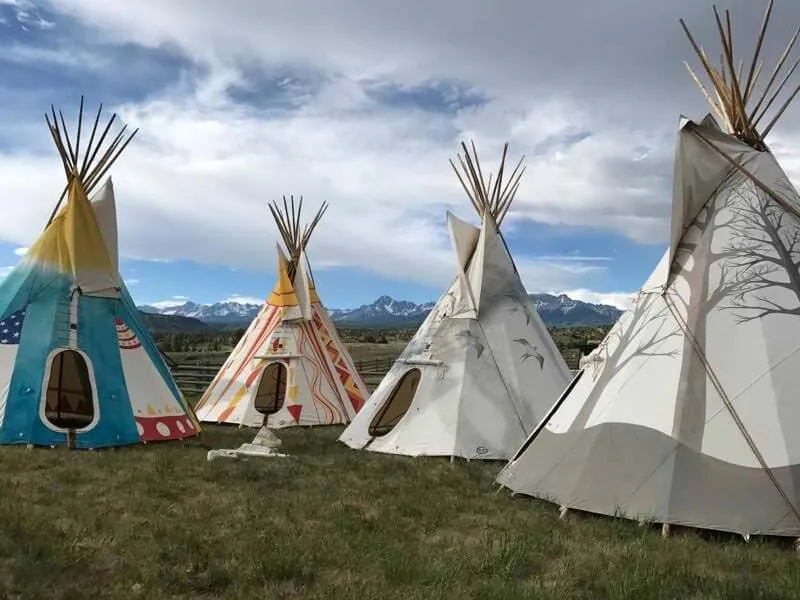
- Tipis are statement pieces that photograph beautifully, and larger tipis double as group lodging, lounges or event spaces.
Use current prices as real inputs for your unit-mix and budget sections:
| Structure | Size | Floor area | Starting price |
|---|---|---|---|
| Yurt kit | 12' | 113 sq ft | $7,200 |
| Yurt kit | 16' | 201 sq ft | $12,270 |
| Yurt kit | 20' | 314 sq ft | $15,195 |
| Yurt kit | 24' | 452 sq ft | $17,240 |
| Yurt kit | 27' | 573 sq ft | $19,575 |
| Yurt kit | 30' | 706 sq ft | $21,620 |
| Legacy Destination Tent | 12' x 14' / 14' x 16' / 16' x 20' | 168 / 224 / 320 sq ft | $1,750 / $2,335 / $2,920 |
| Safari M.U.L.E. Tent™ | 12' x 14' / 14' x 16' / 16' x 20' | by model | $2,410 / $2,635 / $3,090 |
| Earthworks Tipi (cover only) | 12' / 16' / 18' / 20' / 24' / 28' | 110 to 615 sq ft | $530 to $2,305 |
These are starting prices before options, tax, shipping and installation. Add options in the Yurt Builder, Tent Builder and Tipi Builder (pole sets and liners), and see what every kit includes on our yurt kits page.
How Many Units Should a Glamping Site Start With?
Most resort operators start with 4 to 8 units and expand based on demand. Phasing protects your cash and lets booking data shape phase two:
- Phase 1 (opening): [2–4] insulated yurts for year-round revenue, plus [2–4] canvas tents for peak season capacity.
- Phase 2 (after [one full season]): Add [tipis for groups or events], more of whichever unit books best, or a larger 27' or 30' family yurt.
- Shared infrastructure: Size roads, water, power, septic and the bathhouse for your final unit count.
Size matters as much as count. A 20' yurt works well as a couples' retreat, while 24' to 30' yurts suit families. For tipis, 12' to 16' sizes typically sleep about 2 to 5 people, 18' to 22' about 5 to 8, and 24' to 28' about 8 to 16, depending on how you furnish them.
What Does It Cost to Start a Glamping Business?
List every line and get written quotes for the big items. Copy this worksheet:
| Cost line | Formula or source | Your number |
|---|---|---|
| Structures | Units × price per unit (table above) + options | [ ] |
| Freight and installation | Quote per order; owner assembly or professional crew | [ ] |
| Platforms and decks | Units × platform cost (contractor quote) | [ ] |
| Site work | Roads, parking, paths, grading, lighting | [ ] |
| Utilities | Water, power, septic or sewer, internet | [ ] |
| Bathrooms | En-suite per unit or a shared bathhouse | [ ] |
| Furnishings and heat | Units × furnishing package + stoves or heaters | [ ] |
| Permits, engineering and fees | Local building, zoning, health and fire departments | [ ] |
| Insurance (first year) | Broker quote | [ ] |
| Pre-opening marketing | Photos, website, booking setup | [ ] |
| Working capital | [Months] of operating costs before revenue | [ ] |
| Contingency | [10–20]% of the total above | [ ] |
Platforms are often one of the largest lines after the structures. Our yurt platform and foundation guide compares wood decks, SIPs and concrete, and our free yurt deck plans and tent deck plans help contractors price the work accurately. For a full breakdown of yurt pricing, see How Much Does a Yurt Cost?
How Do You Project Glamping Revenue and Break-Even?
Build the model from formulas, then fill in your own research. Run it per structure type, since rates and seasons differ.
- Available nights = Units × Nights open per year
- Booked nights = Available nights × [Your occupancy estimate]
- Room revenue = Booked nights × [Your average nightly rate]
- Total revenue = Room revenue + [Cleaning fees, add-ons, events, firewood, activities]
- Net operating income = Total revenue − Operating costs (cleaning, laundry, utilities, staff, booking fees, insurance, maintenance, taxes, marketing)
- Break-even nights per year = Annual fixed costs ÷ ([Average nightly rate] − [Variable cost per booked night])
- Simple payback (years) = Total startup cost ÷ Net operating income
Model conservative, expected and strong cases, and show the conservative case still covers debt payments. Add a replacement reserve: a Secret Creek yurt can last for decades with replaceable fabric covers, while canvas tents typically last 5 to 10 years with proper care. Set aside [an annual amount] per unit.
What Permits and Zoning Does a Glamping Site Need?
Land use is the section most likely to stop a project, so research it before buying land or ordering structures. Ask your county or city:
- Is short-term lodging or a campground allowed in this zone, and does it need a special or conditional use permit?
- Do yurts, tipis and tents need building permits, and do they count as structures or as camping units?
- What do health, septic, fire and access-road rules require for overnight guests?
Requirements vary by county and state. Our team can provide engineering documents and specifications often required for permitting; our step-by-step yurt permits and building codes guide walks through the process.
How Do You Plan Operations, Guest Experience and Marketing?
Cover check-in, cleaning and laundry turnover, maintenance, guest messaging, and heat, water and waste in each season. A wood stove or other heat source turns a summer unit into a shoulder-season one; see our canvas tent with stove guide and yurt insulation guide.
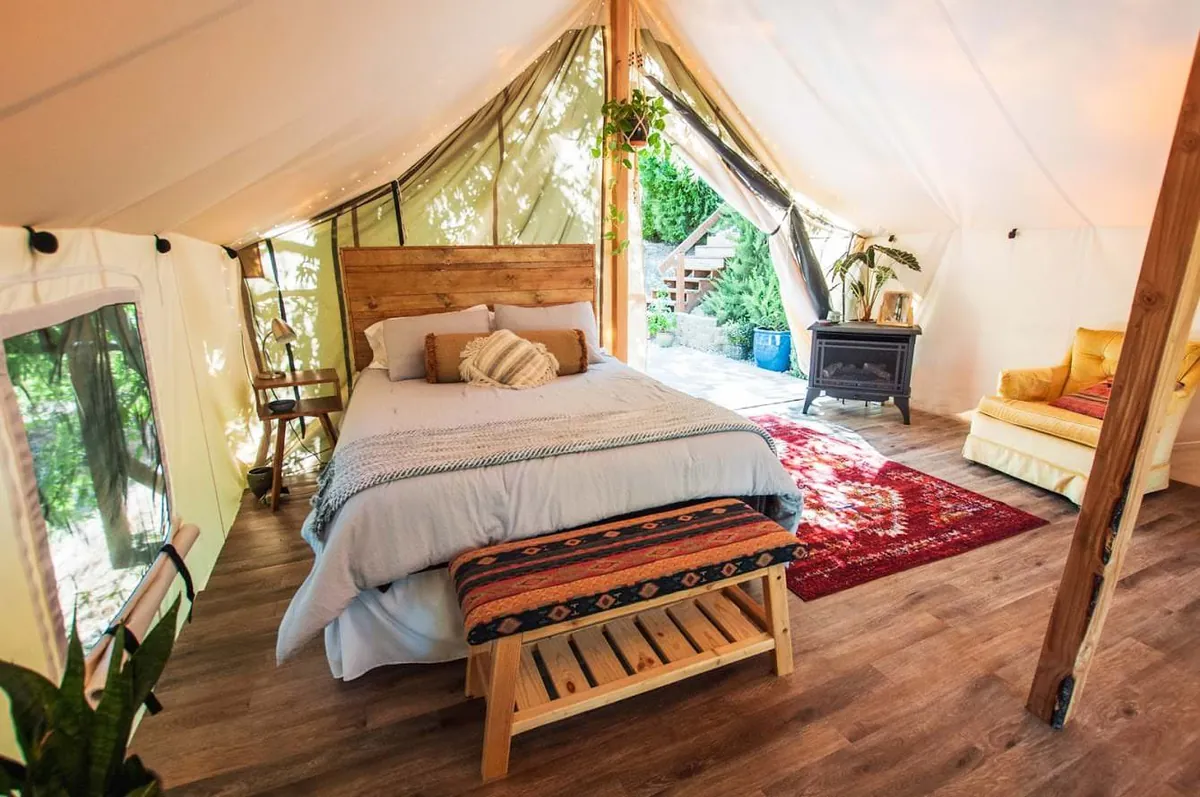
For marketing, list your channels (website, booking platforms, social media, tourism and event partners) and a launch plan. Distinctive structures are your strongest photos, and a mix of yurts, tipis and safari tents gives guests a reason to return for a different stay.
How Do You Finance a Glamping Business?
Show total project cost, your contribution, the amount borrowed, the monthly payment and how your conservative case covers it. For structures, Secret Creek offers financing through Enhancify, which lets you compare offers from a network of third-party lenders and pre-qualify with no impact to your credit score. Approval, rates and terms are set by the lender. Bulk pricing is available on multi-unit commercial orders.
What Is the Timeline From Plan to First Guest?
Work backward from your opening date and build in time for permits, site work and production:
- Yurts: Most are handcrafted and ready to ship within 6 to 10 weeks of your order, and in-stock yurts can ship sooner. Most can be set up in 1 to 3 days with a small crew.
- Canvas tents: Typical production is 4 to 6 weeks, longer during the busy March through July season, plus about 3 to 5 business days of shipping. Most commercial tents install in 1 to 2 days.
- Tipis: A smaller tipi can be pitched by one person in 1 to 3 hours; medium and larger tipis take about 2 to 4 hours.
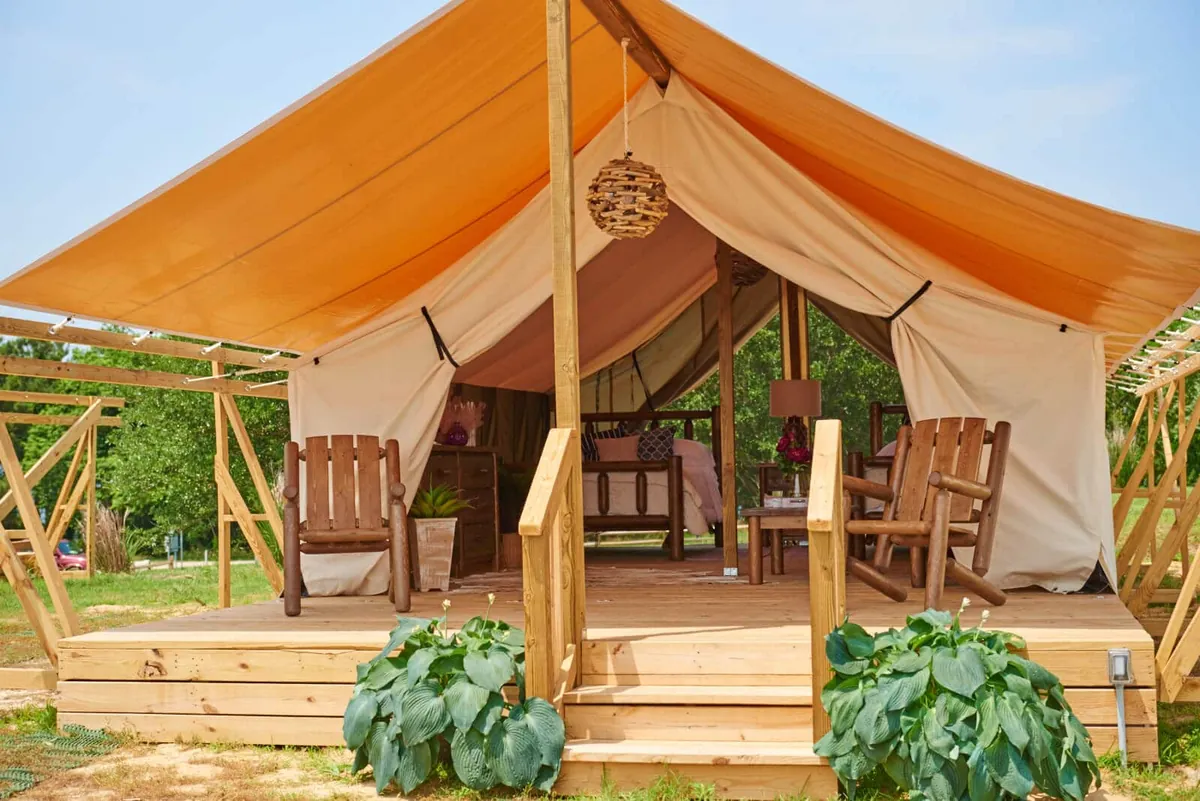
Order early for a spring or summer opening; platforms, utilities and inspections often take longer than the structures.
Glamping Business Plan Checklist
- Write your concept and define your primary guest.
- Research [8–12] local comparable stays.
- Confirm zoning, permits and health and fire rules for overnight guests.
- Choose your mix and sizes of yurts, tipis and canvas tents.
- Price every startup line and add a contingency.
- Build revenue and break-even formulas in three cases.
- Plan operations and marketing.
- Line up financing and a timeline that fits lead times.
- Write the one-page executive summary last.
Ready to turn your plan into real numbers? Price units in the Yurt Builder, explore our glamping resort solutions, compare options in our glamping yurts guide, or request a consultation with a Sales Guide at 970.240.2111. Secret Creek has handcrafted yurts, tipis and canvas tents since 1976.
Frequently Asked Questions
What should a glamping business plan include?
An executive summary, concept and target guest, local market research, unit mix, startup budget, revenue and break-even projections, permits, operations and marketing, and a financing and launch timeline.
Are yurts a good choice for a glamping business?
Yes. Insulated yurts operate in all four seasons, fit king beds and en-suite baths, and last for decades with proper care. Many sites pair them with canvas tents and tipis.
How many units should a new glamping site start with?
Most resort operators start with 4 to 8 units and expand based on demand, sizing shared utilities for the final unit count.
How much does a glamping yurt, tent or tipi cost?
Secret Creek yurt kits start at $7,200 for a 12' and $21,620 for a 30'. Legacy canvas tents start at $1,750, Safari M.U.L.E. Tents at $2,410, and tipi covers at $530, before options, tax, shipping and installation.
How do I estimate glamping revenue without guessing?
Use formulas: booked nights equal available nights times your occupancy estimate, and revenue equals booked nights times your average nightly rate. Take both from real comparable stays near your land.
Do I need a permit to start a glamping business?
Usually, yes. Zoning, building, health and fire rules vary by county and state, so check with local building and planning departments before buying land or ordering structures.