
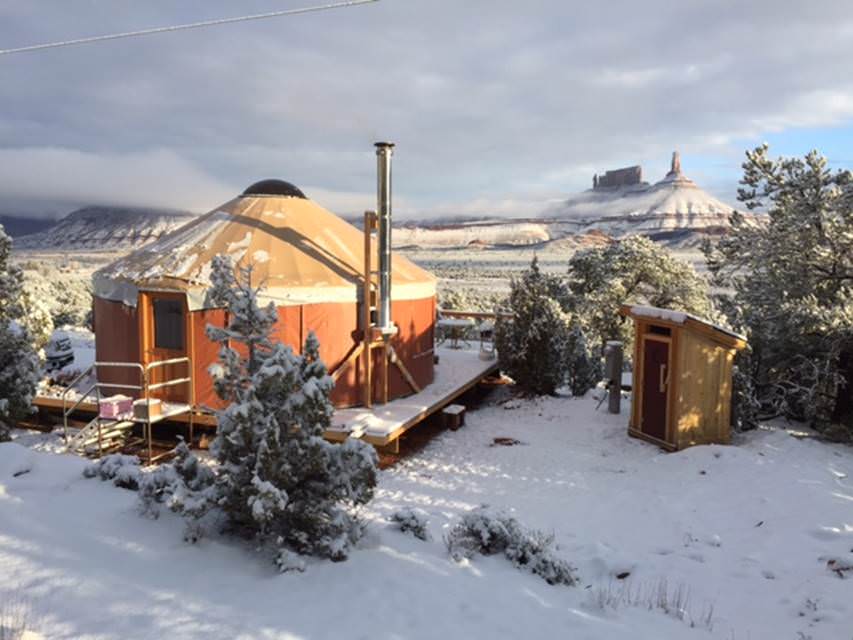
Quick answer: Yes, you can put a wood stove in a yurt, and it is the most popular way to heat one. The keys are choosing a small, efficient stove sized to your yurt's floor area and insulation, running the stovepipe through a roof outlet with insulated flashing, keeping the stove manufacturer's listed clearances from the lattice wall, rafters and fabric, and installing smoke and carbon monoxide alarms. Secret Creek yurts can be ordered with a Stovepipe Outlet option ($85) that includes an insulated stovepipe flashing kit, so the pipe can pass safely through the roof cover.
A wood stove turns a yurt into a true four-season space, but it raises the questions every buyer asks: how big a stove, where it goes, how the pipe gets through a fabric roof, and how to keep it safe. This guide answers each one. If you are still comparing heat sources in general, start with Yurt Questions Answered: The Hot and Cold of It. If you have already decided on wood heat, read on.
Can you put a wood stove in a yurt?
Yes. A yurt's open, single-room floor plan lets one stove heat the whole space, and the vaulted ceiling gives the stovepipe a straight, vertical run to the roof. Because a yurt has a wood lattice wall, wood rafters and a fabric cover, the stove, pipe and roof penetration should be planned before the yurt goes up. At Secret Creek, you add the Stovepipe Outlet when you configure your yurt in the Yurt Builder. It includes an insulated stovepipe flashing kit, which is the part that seals and protects the roof cover where the pipe passes through.
Why do yurt owners choose wood heat?
A wood stove needs no electricity, so it works during outages and on off-grid sites. Its radiant heat feels comfortable in a fabric structure, firewood can be inexpensive, and the flat top doubles as a cooktop. The trade-off is work: splitting and drying wood, feeding the fire and cleaning the chimney. For power, water and heat planning together, see our off-grid yurt setup guide.
What size wood stove does a yurt need?
Start with floor area. Stove manufacturers rate their models by the area they can heat, so match that rating to the square footage of your yurt. Here are the floor areas for each Secret Creek size:
| Yurt diameter | Floor area | Typical use |
|---|---|---|
| 12' | 113 sq ft | Sleeping cabin, studio, hunting or ski hut |
| 16' | 201 sq ft | Guest yurt, glamping unit, office |
| 20' | 314 sq ft | Small cabin with kitchenette |
| 24' | 452 sq ft | Small home or large rental |
| 27' | 573 sq ft | Full-time home, classroom |
| 30' | 706 sq ft | Larger home, event or retreat space |
Then adjust for the things that make a yurt different from a framed house:
- Fabric walls. Plan on needing more heating capacity than a similarly sized traditional dwelling.
- Insulation level. An insulated roof, walls and floor need far less stove than an uninsulated summer yurt. See Yurt Insulation.
- Climate and use. A weekend cabin in a mild climate and a full-time home in a cold, windy place need very different output.
Why not just buy the biggest stove?
Because an oversized stove overheats a small space, so owners turn the air down and let the fire smolder. A smoldering fire burns less efficiently and builds creosote in the pipe faster, which raises chimney fire risk. A small, efficient stove run at a steady, moderate burn is usually the better choice. When in doubt, share your yurt size, insulation and climate with a stove dealer.
What type of wood stove works best in a yurt?
Most yurt owners choose a compact freestanding stove. Look for:
- A listed, certified stove. Choose one tested and listed for residential use that meets current emissions standards where you live. It comes with published clearance and installation instructions.
- A right-sized, airtight firebox. It holds a fire longer at moderate output.
- Reduced-clearance options. Some stoves are listed for smaller clearances with factory heat shields, helpful when floor space is tight.
- A flat cooktop and glass door. Useful for heating water off-grid and for watching the fire.
Pellet stoves are another option, but they need electricity for their feed system, so they suit grid-tied yurts more than remote ones.
How does a stovepipe go through a yurt roof?
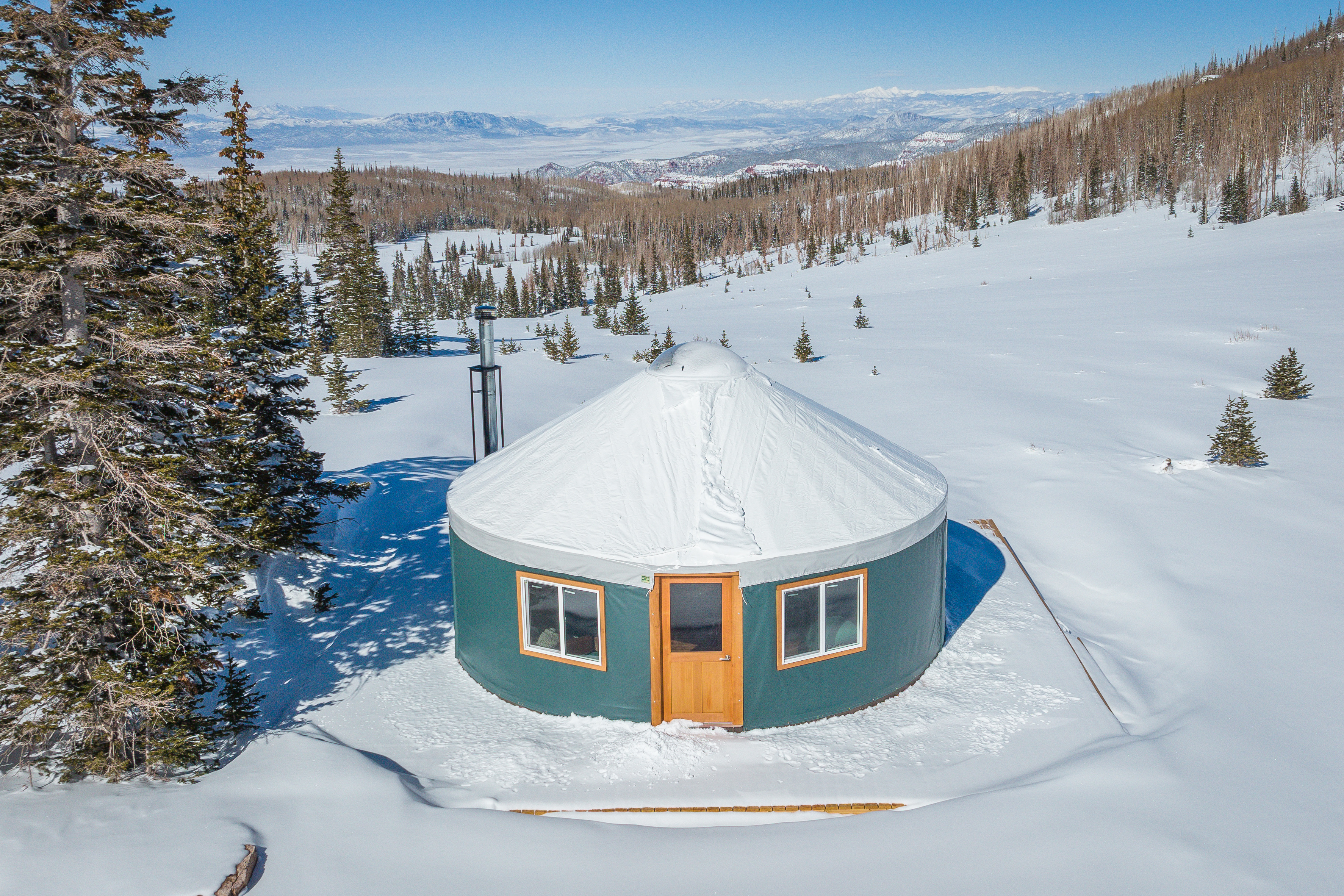
In a yurt, the stovepipe usually rises straight up from the stove and exits through the roof cover. That penetration is the most important detail of the installation, because it is where hot pipe meets fabric and where weather can get in.
Secret Creek's Stovepipe Outlet option ($85 in the Yurt Builder) includes an insulated stovepipe flashing kit for this job. Ordering it with your yurt means the outlet is planned as part of the kit, not cut in later. Tell your Sales Guide where the stove will go so the outlet matches your layout.
General rules for almost every stovepipe installation:
- Use the right pipe in the right place. Inside the room, single- or double-wall connector pipe runs from the stove. Where the pipe passes through the roof and outdoors, use the listed chimney pipe and parts your stove and chimney manufacturers specify.
- Keep it tall enough. Many codes follow a version of the "3-2-10" rule: at least 3 feet above where it exits the roof and 2 feet higher than any roof within 10 feet. A taller chimney also drafts better.
- Cap it. A chimney cap with a spark arrestor keeps rain and animals out and reduces the chance of embers landing on the roof or nearby trees.
- Brace it. A tall pipe needs support against wind. In snowy climates, plan for snow sliding off the roof cone, and consider the Snow + Wind load package for the yurt.
Where should the wood stove go inside a yurt?
There are two common layouts:
- Near the center. Under the highest part of the ceiling, a stove heats evenly and the pipe has the most clearance from rafters and wall, but it uses prime floor space.
- Off to one side. This frees the middle of the room, but the stove must still meet its listed clearances to the lattice wall, rafters, door swing and furniture.
Either way, keep the stove out of the door path and away from fabric windows, and leave room for a wood box. Our guide to yurt interiors shows how real Secret Creek owners lay out kitchens, bathrooms and living areas around a heat source, and the yurt sizes guide helps you check how much floor space a stove zone takes in each diameter.
How do you install a wood stove in a yurt safely?
Treat it like a house installation:
- Follow the stove's manual. The listed clearances to combustibles and floor protection requirements on the label and in the manual are the rules that matter.
- Protect the floor. A yurt platform is usually wood, so set the stove on a noncombustible hearth pad that meets the manufacturer's size and rating requirements.
- Shield where allowed. Listed heat shields can reduce required clearances when the stove permits it.
- Install alarms and an extinguisher. Add smoke and carbon monoxide alarms, test them regularly, and mount an extinguisher near the door.
- Check permits and insurance. Many jurisdictions require a permit and inspection, and insurers often ask for proof of a code-compliant installation. Have a qualified installer do or review the work.
How do you keep a wood-heated yurt warm through the night?
A stove only adds heat; the yurt has to hold it. The biggest gains usually come from the building:
- Insulate roof and walls. Secret Creek offers a base EcoFoil kit that blocks up to 96% of radiant heat and an upgraded Prodex kit rated R-22 in the walls and R-44 in the roof.
- Insulate the floor. Structural insulated panels (SIPs) rated R-23 are available for the platform; see our SIPs deck guide.
- Cover the dome at night. The Dome Insulation Cover ($95) slows heat loss through the skylight.
- Move warm air down. Warm air collects under the dome; a Ceiling Fan Mount ($85) lets a fan push it back toward the floor.
- Burn dry wood and plan a backup. Seasoned wood burns hotter and cleaner than green wood, and a second heat source covers nights when the fire goes out.
How do you maintain a yurt wood stove?
- Clean the chimney. Inspect the pipe during the heating season and have it cleaned when creosote builds up, at least once a year.
- Check the roof flashing. Each fall, look at the flashing and roof cover around the pipe for wear, gaps or leaks.
- Replace worn gaskets. Tight door gaskets keep the stove airtight and controllable.
- Handle ashes safely. Store them in a lidded metal container away from the yurt and deck.
How does a wood stove compare with other yurt heat sources?
| Heat source | Needs power? | Best for |
|---|---|---|
| Wood stove | No | Off-grid sites, cold climates, cozy rentals |
| Pellet stove | Yes | Grid-tied yurts that want automated wood heat |
| Propane heater | Varies by model | Backup heat, shoulder seasons |
| Electric heat or mini-split | Yes | Grid-tied homes and offices; mini-splits also cool |
Many full-time owners pair a wood stove with a backup source. For a full comparison of heating and cooling options, read The Hot and Cold of It, and for what four-season life feels like, see Yurt Living Year-Round.
Yurt wood stove planning checklist
- Know your size. Diameter and floor area come first.
- Choose insulation and floor. EcoFoil or Prodex, an insulated platform and a dome cover.
- Choose a listed stove. Match its rated heating area to your yurt and climate.
- Plan the layout. Mark the stove zone, clearances, hearth pad and wood storage.
- Order the Stovepipe Outlet. Confirm its location with your Sales Guide.
- Check codes and insurance, then install alarms before the first fire.
Frequently Asked Questions
Can you have a wood stove in a yurt?
Yes. Wood stoves are the most popular way to heat a yurt. Order a stovepipe outlet with insulated flashing, use a listed stove and chimney parts, follow the manufacturer's clearances and install smoke and carbon monoxide alarms.
What size wood stove do I need for a yurt?
Match the stove's rated heating area to your yurt's floor area, from 113 sq ft for a 12' yurt to 706 sq ft for a 30' yurt, then adjust for insulation and climate. Avoid oversizing; a small stove run at a steady burn is safer and cleaner.
How does a stovepipe go through a yurt roof?
The pipe rises from the stove and exits through the roof cover at a stovepipe outlet. Secret Creek's Stovepipe Outlet option includes an insulated stovepipe flashing kit that protects and seals the fabric where the pipe passes through.
Is a wood stove in a yurt safe?
It is when installed correctly. Use a listed stove, a noncombustible hearth pad, proper clearances, the right chimney parts and a spark-arrestor cap. Add smoke and CO alarms, keep an extinguisher handy and clean the chimney regularly.
Where should a wood stove go in a yurt?
Near the center gives the most even heat and clearance under the highest part of the ceiling. Off-center placement frees floor space but must still meet the stove's listed clearances to the wall, rafters, door and furniture.
How much firewood does a yurt use in winter?
It depends on size, insulation, climate and how often the yurt is used. As a rough guide, our year-round living article estimates that an insulated 24' yurt heats on about 1 to 2 cords of wood per winter.
Next Steps
Ready to plan a wood-heated yurt? See what ships in the crate in Yurt Kits Explained, plan your platform with the deck plans, then add the Stovepipe Outlet, insulation and dome options in the Yurt Builder. Prefer to talk it through? Request a consultation with a Sales Guide at 970.240.2111. Secret Creek has handcrafted yurts, tipis and canvas tents since 1976.