
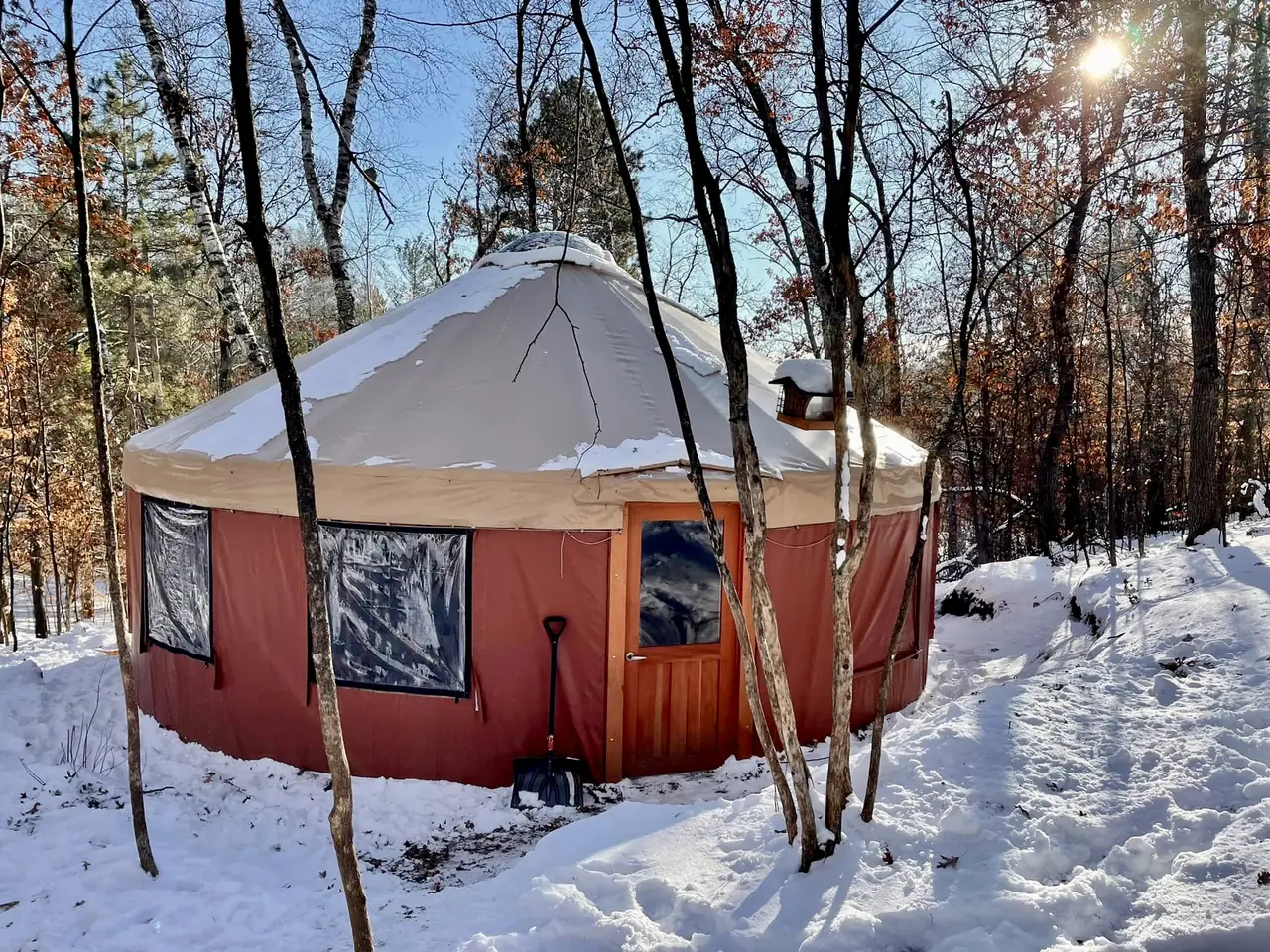
Quick answer: Yes, you can live in a yurt in winter and use it year-round, as long as it is set up for four seasons. A year-round yurt needs six things: roof and wall insulation (Secret Creek's upgraded Prodex kit is rated R-22 walls and R-44 roof), an insulated floor or platform, a heat source sized to the yurt with a properly flashed stovepipe or vent, a snow and wind load package matched to your site, tight windows, doors and dome, and a plan for moisture and frozen pipes. Get those right and a modern yurt can be comfortable through deep winter, wet spring, hot summer and windy fall.
This guide is a planning hub: a four-season checklist of every system a year-round yurt depends on, with links to our detailed guides on insulation, wood stoves, snow and wind ratings and permits and building codes.
Can You Live in a Yurt Year-Round?
Yes. Many Secret Creek customers use their yurts as full-time residences or year-round getaways, and with proper insulation and heating and cooling, a yurt can be comfortable in all seasons. A summer yurt and a four-season yurt share the same lattice wall, rafters, center ring and fabric covers. What changes is the package around them: insulation, platform, load framing, openings and heat. Decide early how you will use the yurt, because options like floor insulation and the stovepipe outlet are much easier to plan before it goes up. For a full look at living in a yurt as a primary home, see Yurt Homes: Can You Live in a Yurt Full-Time?
What Is It Like Living in a Yurt in Winter?
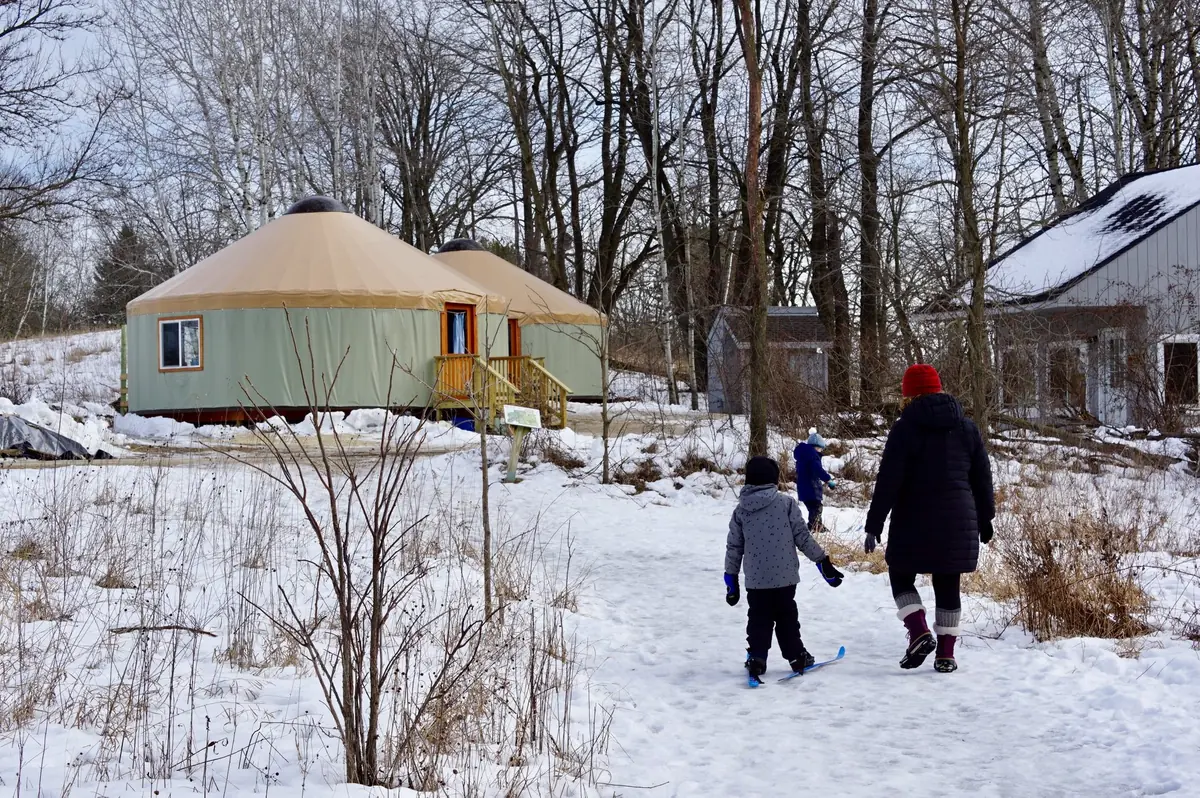
A well-planned yurt is rewarding in winter. The round, open room heats evenly from a single stove or heater, the dome brings in daylight on short days, and with no interior walls, warm air circulates through the whole space. Winter also asks more of you than a framed house: fabric walls hold less heat, so you size the heat source generously; warm air collects under the dome, so a ceiling fan earns its keep; moisture needs somewhere to go; and in snow country you watch the roof, stovepipe and path to the door.
How Do You Keep a Yurt Warm in Winter?
Holding heat in matters as much as making it. A yurt loses heat by radiation toward the roof and walls, by conduction through fabric, floor and glass, and by warm air escaping at the dome, doors and stovepipe.
- Insulate the roof and walls. Secret Creek offers a base EcoFoil kit that blocks up to 96% of radiant heat and an upgraded Prodex kit rated R-22 for walls and R-44 for the roof; Prodex is the stronger choice for full-time winter living. See the yurt insulation guide.
- Close the top. The Dome Insulation Cover ($95) slows heat loss through the skylight at night, where warm air collects.
- Move warm air back down. The Ceiling Fan Mount ($85) adds a center brace so a fan can push air from the peak back toward the floor.
- Choose a heat source and a backup. Wood stoves, pellet stoves, propane heaters, mini-split heat pumps and radiant floor heat all work; pair a primary source with a backup.
Can You Heat a Yurt With a Wood Stove?
Yes, and it is the most popular way to heat a yurt in winter. A wood stove needs no electricity, and one stove can heat the whole open room. The keys are a small, efficient stove sized to your floor area and insulation, the manufacturer's listed clearances from the lattice wall, rafters and fabric, a noncombustible hearth pad on the wood floor, and working smoke and carbon monoxide alarms.
Secret Creek's Stovepipe Outlet option ($85) includes an insulated stovepipe flashing kit so the pipe can pass safely through the cover. Sizing, placement and venting are covered in our yurt wood stove guide.
How Do You Keep a Yurt Floor Warm?
Cold air under a raised platform can make a warm yurt feel chilly underfoot, so insulate the floor before the deck surface goes on:
- SIPs platform. Structural insulated panels, offered in the Yurt Builder as R-23 panels pre-cut to the exact diameter of the yurt, give you an insulated floor and a finished platform in one system.
- Insulated framed deck. Build from our free yurt deck plans, insulate between the joists and close the underside so the insulation stays dry and protected from pests.
- Fiber insulated deck (12' only). An in-house insulated platform option for the 12' yurt, priced at $1,400 in the Yurt Builder.
Skirting the space under a raised deck also cuts wind-driven heat loss. Compare every option in our yurt platform and foundation guide.
Can a Yurt Handle Heavy Snow and Wind?
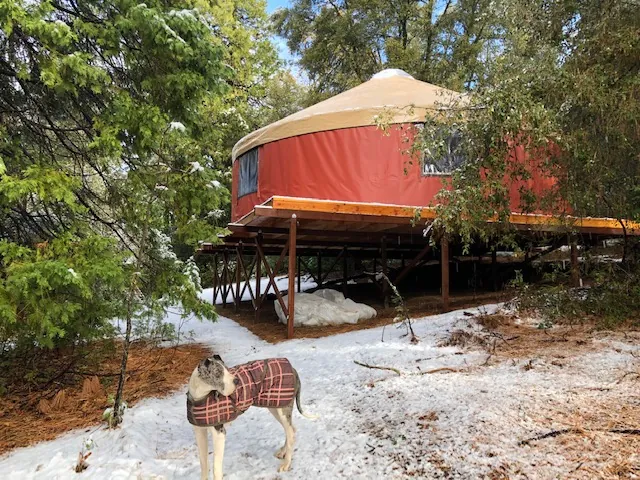
An engineered yurt can. Depending on size and load package, Secret Creek yurts can be rated for snow loads up to 115 PSF and wind speeds of 115 MPH or more (ratings vary by model). The frame is matched to your climate with a load package:
- Base: 2"x4" rafters with brackets connecting each rafter to the ring, for milder climates.
- Wind: the base package plus 2"x4" studs under each rafter, for open or gusty sites.
- Snow + Wind: studs under each rafter plus an upgrade to 2"x6" engineered rafters, for heavy-snow regions and year-round living. It is included on Secret Creek's 24', 27' and 30' pre-configured yurt kits.
Your building department sets the design snow and wind loads for your parcel, so get those numbers first and match the package to them. Our snow load and wind rating guide explains PSF, MPH and what to ask any manufacturer.
What Does a Four-Season Yurt Cost?
Current starting kit prices from the Yurt Builder, with the two winter upgrades most full-time owners add (floor areas from our yurt kits page; prices change, so confirm before ordering):
| Yurt size | Floor area | Starting kit price | Prodex insulation kit | Snow + Wind package |
|---|---|---|---|---|
| 12' | 113 sq ft | $7,200 | $2,515 | $1,110 |
| 16' | 201 sq ft | $12,270 | $3,130 | $1,460 |
| 20' | 314 sq ft | $15,195 | $3,980 | $1,755 |
| 24' | 452 sq ft | $17,240 | $5,420 | $2,340 |
| 27' | 573 sq ft | $19,575 | $6,625 | $2,630 |
| 30' | 706 sq ft | $21,620 | $8,180 | $3,210 |
Platform, delivery, heat, utilities and finishes are separate; see How Much Does a Yurt Cost, and to compare sizes for full-time living, use the yurt sizes guide.
How Do You Prevent Condensation and Frozen Pipes?
Warm, moist indoor air condenses on cold fabric. Run a ceiling fan, crack the dome or a window briefly, vent kitchens and bathrooms outside, and keep the yurt evenly heated. For plumbing, water and drain lines usually come up through the platform, so lay them out before the deck is built, bury supply lines below frost depth where required, and protect any runs under the deck from freezing. Our yurt bathroom guide and off-grid yurt setup guide cover water, waste and power in detail.
Which Windows and Doors Work Best Year-Round?
Openings are where comfort is won or lost. Secret Creek fabric windows include bug netting and removable insulation panels, so you can open them up in summer and close them in winter, and for full-time homes the Glass Casement Window has clear low-E glass and is large enough to meet egress code requirements. Larger yurts can add a 60" fiberglass French door (24' and up). Weatherstrip doors carefully.
Do You Need a Permit for a Year-Round Yurt?
Often, yes. A yurt used as a dwelling or rental usually needs zoning approval and a building permit, and reviewers may check snow and wind loads, energy code, egress and the platform. Secret Creek Sales Guides can provide documentation, including snow and wind load engineering, to support your application. Our yurt permits and building codes guide walks through the process step by step.
How Do You Prepare a Yurt for Each Season?
A short checklist at each change of season keeps a yurt tight, dry and safe. With proper care, a Secret Creek yurt can last for decades: the wood frame is built to last, and the fabric covers can be replaced over time.
Fall: get ready for winter
- Check cover tension and the tension cable, and tighten as needed.
- Inspect the stovepipe flashing and the roof cover around the pipe; clean the chimney before the first fire.
- Test smoke and carbon monoxide alarms, stock dry firewood and confirm your backup heat.
- Install window insulation panels and the dome insulation cover; check door weatherstripping.
Winter: stay warm and clear
- Keep the dome and stovepipe clear of heavy snow, and keep a path to the door.
- On lower-rated yurts during long storms, clear heavy buildup carefully from the ground with a soft roof rake.
Spring: dry out and inspect
- Inspect covers, the dome and the platform after snowmelt; make sure water drains away from the deck.
- Swap insulation panels for screens and check stove gaskets and flashing.
Summer: stay cool
- Reflective insulation keeps solar heat out through the roof; an Operable Dome Lifter ($210) vents hot air at the peak, and a Tinted Dome Upgrade ($210) helps regulate temperature.
- Open windows low and the dome high for cross-ventilation.
Four-Season Yurt Checklist
- Define your use: full-time home, winter rental, guest unit or retreat.
- Choose a size with room for a stove zone; most full-time homes are 24' to 30'.
- Get your design loads from your building department and pick the matching load package.
- Insulate roof and walls (Prodex for full-time cold-climate living).
- Insulate the floor with SIPs, an insulated framed deck or a fiber deck on a 12'.
- Close the top with a dome insulation cover and add a ceiling fan mount.
- Plan heat and venting: stove or heater, Stovepipe Outlet, alarms and a backup.
- Choose openings: fabric windows with insulation panels or low-E glass, plus well-sealed doors.
- Plan water and power before the platform is built, protected from freezing.
- Confirm permits and request engineering documents early.
Ready to plan yours? Configure insulation, load package, windows and heat in the Yurt Builder, read what daily life feels like in Yurt Living Year-Round, or request a consultation with a Sales Guide at 970.240.2111. Secret Creek has handcrafted yurts, tipis and canvas tents since 1976.
Frequently Asked Questions
Can you live in a yurt in winter?
Yes. With roof, wall and floor insulation, a dome cover, a properly sized heat source and a snow and wind load package where needed, people live in yurts through cold, snowy winters.
Are yurts warm enough for year-round living?
When they are set up for it. Secret Creek's Prodex insulation kit is rated R-22 for walls and R-44 for the roof, and pairing it with an insulated platform and a wood stove, heat pump or other heat source keeps a yurt comfortable in all seasons.
What is the best way to heat a yurt in winter?
A wood stove is the most popular choice because it needs no electricity and heats the open room evenly. Pellet stoves, propane heaters, mini-splits and radiant floor heat also work, ideally with a backup.
How much snow can a yurt hold?
It depends on the size and load package. Secret Creek yurts can be rated for snow loads up to 115 PSF and winds of 115 MPH or more, varying by model.
How do you stop condensation in a yurt?
Keep air moving with a ceiling fan, ventilate briefly, vent kitchens and bathrooms outdoors and keep the yurt evenly heated.
How long does a year-round yurt last?
With proper care, a Secret Creek yurt can last for decades. The wood frame is built to last, and the fabric covers can be replaced over time.