
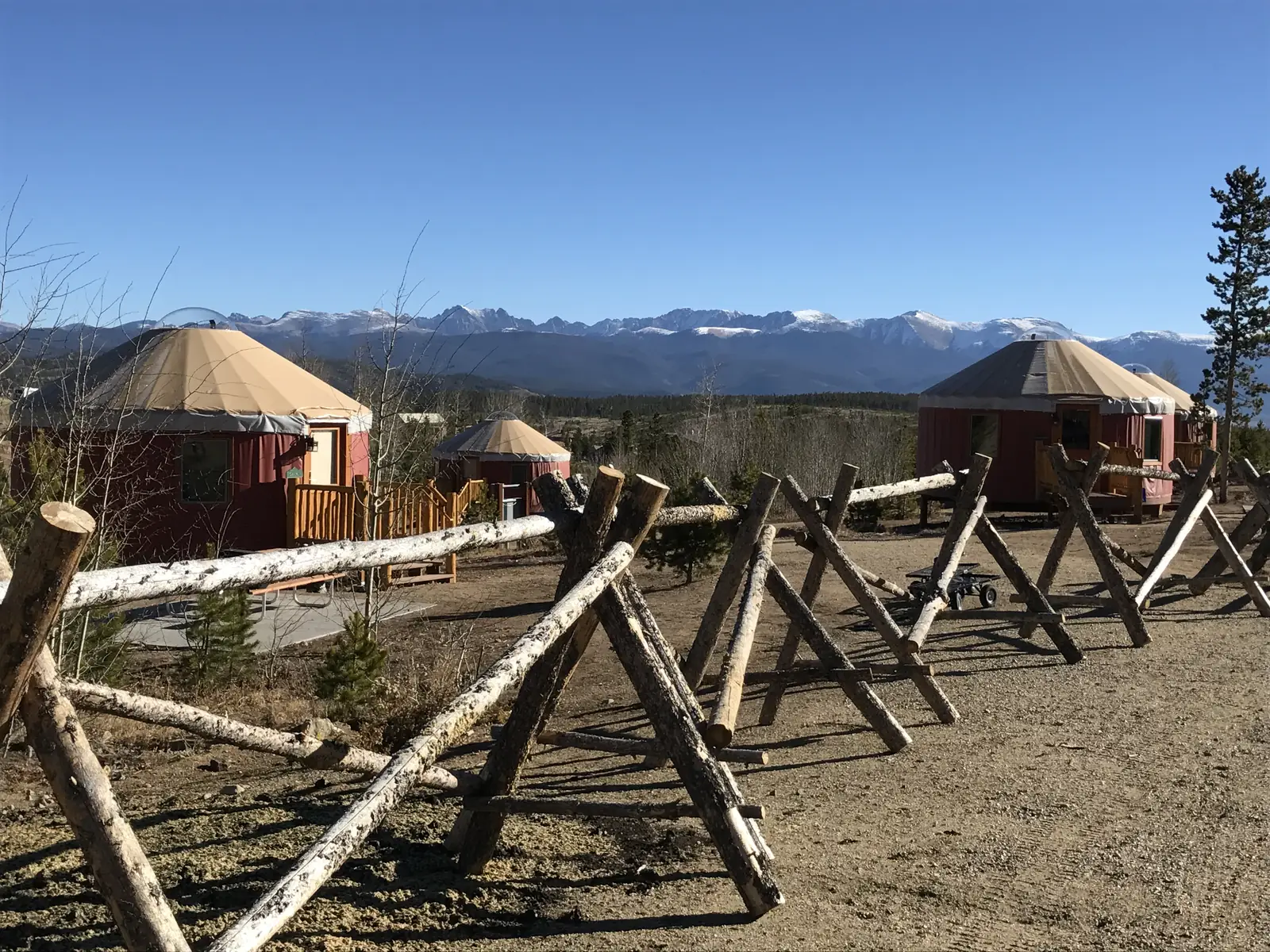
Quick answer: Yurts for campgrounds are round, fabric-covered structures on wooden platforms that turn ordinary campsites into premium, bookable stays for guests who don't own an RV or camping gear. Most campgrounds start with a small cluster of 16' to 24' yurts or canvas tents near the existing bath house, add power first and plumbing later, and grow the count once demand is proven. A Secret Creek yurt kit starts at $7,200 for a 12' and most units install in 2 to 3 days once the platform is ready, which is far faster than building cabins.
Why Are Campgrounds Adding Yurts and Tents?
Many campers want the outdoors without towing a trailer or packing a tent. A furnished yurt or safari tent gives that guest a real bed, a door that locks and walls that handle weather, while still feeling like camping. For a campground operator, that means:
- A new kind of guest. Families, couples and first-time campers who would never book a bare tent site.
- A higher-value site. A structure site is a premium product compared with a standard tent pad, so it can carry its own nightly rate.
- A longer season. Insulated, four-season yurts can stay open in shoulder seasons when tent sites sit empty.
- Speed and a light footprint. Structures go up in days on a platform, without the cost and timeline of permanent construction, and they suit environmentally sensitive sites.
- Repeatable units. Standard configurations give every guest a consistent experience across sites.
Which Structure Fits Your Campground: Yurt, Canvas Tent or Tipi?
Each structure suits a different guest and budget. Many campgrounds mix two or three types so they can offer more than one price point.
| Structure | Common campground sizes | Starting price (kit or tent) | Typical setup | Best for |
|---|---|---|---|---|
| Yurt | 16' (201 sq ft), 20' (314 sq ft), 24' (452 sq ft) | $12,270 (16'), $15,195 (20'), $17,240 (24') | 1 to 3 days per unit | Four-season stays, couples and families, longer visits |
| Legacy canvas tent | 12' x 14' (168 sq ft), 14' x 16' (224 sq ft), 16' x 20' (320 sq ft) | $1,750, $2,335, $2,920 | 1 to 2 days | Seasonal glamping, lower entry cost |
| Safari M.U.L.E. Tent | 12' x 14', 14' x 16', 16' x 20' | $2,410, $2,635, $3,090 | 1 to 2 days | Safari-style glamping on decks |
| Tipi | 18' to 20' for lodging, 22' to 28' for gathering | Covers from $1,065 (18') | 2 to 4 hours | Signature sites, groups, event space |
Yurt prices are kit base prices; tent and tipi prices are for the tent or cover. All exclude options, platforms, tax, shipping and installation. The full Secret Creek range runs from a 12' yurt (113 sq ft, $7,200) to a 30' yurt (706 sq ft, $21,620). For a deeper comparison, read yurt tents vs. canvas tents vs. tipis.
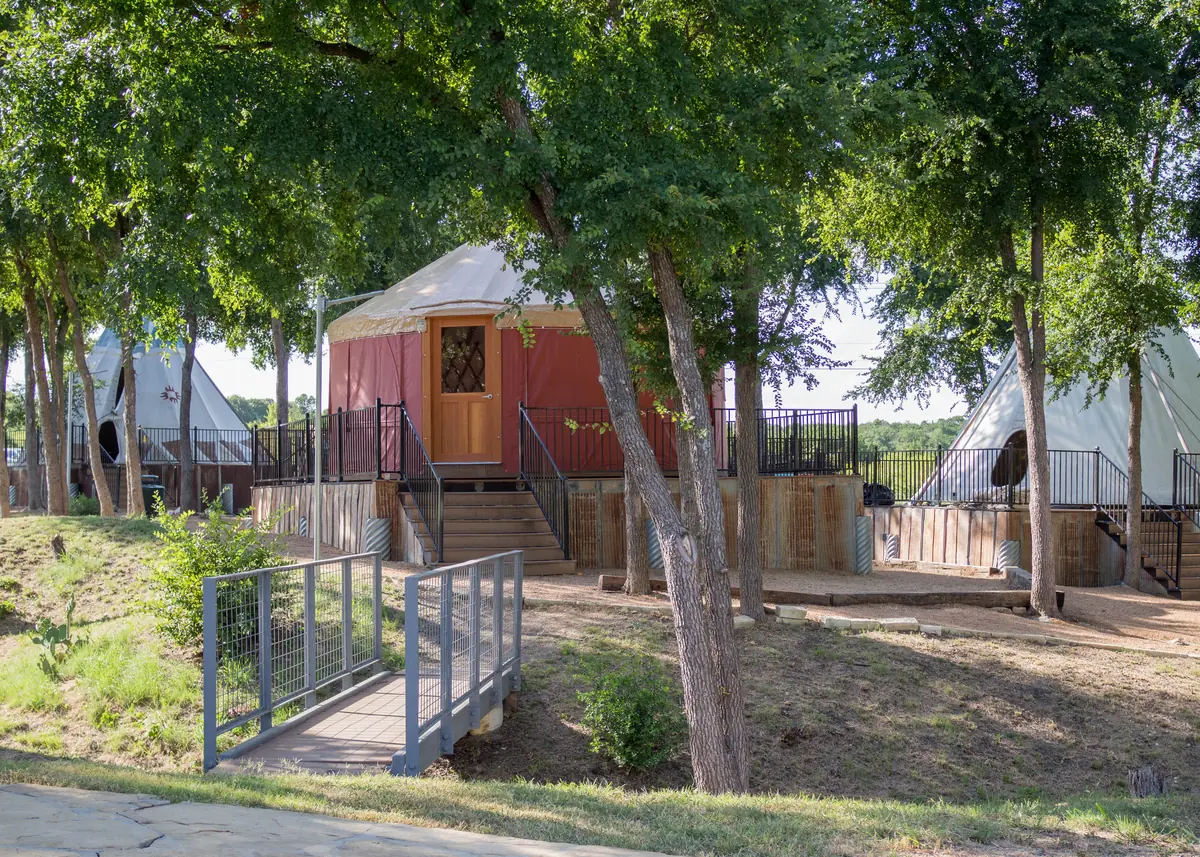
Yurts are the most versatile campground unit. They have a solid door, real windows, a dome skylight and an optional snow and wind kit, and with insulation they work year-round. A 16' fits a couple, a 20' fits a couple with room to spread out, and a 24' fits a family.
Canvas tents cost the least per unit and are built for constant guest use, with heavy-gauge zippers, reinforced grommets and room for a king bed. They are ideal for a seasonal glamping row.
Tipis create an iconic look and natural ventilation through adjustable smoke flaps. Smaller tipis work as boutique sleeping sites, and larger ones make great gathering spaces for groups.
How Many Yurts Should a Campground Start With?
Start with a cluster you can fill, then expand. Many commercial operators open with 4 to 8 units and add more based on demand. Smaller campgrounds often test the idea with 2 to 4 units on one loop. A few rules of thumb:
- Size shared utilities for the final count. Trenching for power and water once is cheaper than doing it twice.
- Standardize. Ordering the same size and layout keeps furnishing, cleaning and maintenance simple. Bulk pricing is available on orders of 4 or more units.
- Offer two tiers. For example, a few insulated 20' yurts for year-round guests and a row of canvas tents for summer.
To model the numbers, use the formulas in our glamping business plan template.
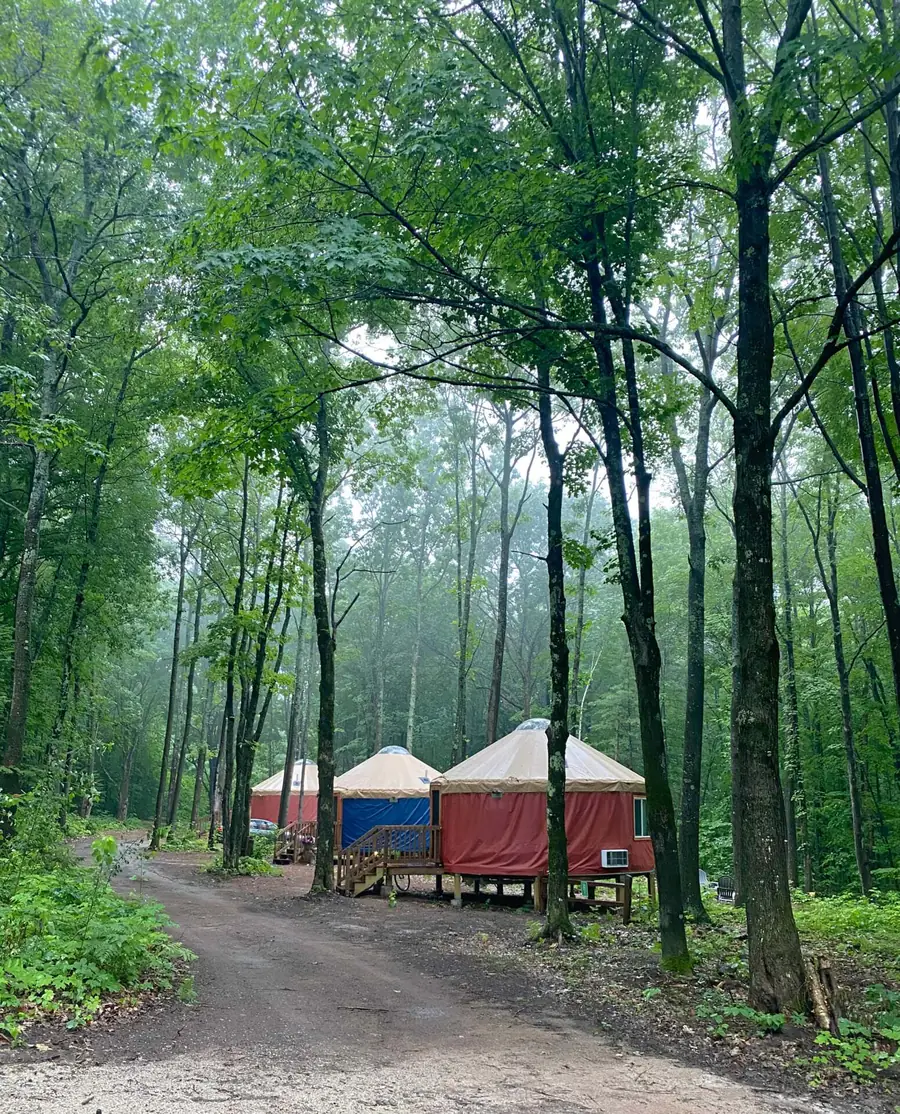
Where Should Yurts Go on a Campground Site Plan?
Look for spots that are private but close to services. For more on what guests remember, see designing the glamping guest experience.
- Near the bath house. If units won't have their own bathrooms, guests should be able to walk to showers and toilets easily, ideally on a lit path.
- At the edge, facing the view. Orient doors and decks toward sunsets, water or woods and away from RV hookups and the road.
- Grouped, not scattered. A cluster shares parking, utility runs and housekeeping routes.
- On a loop or a trail. Units in a campground loop suit guests who want to camp near friends in trailers and tents; units near trails suit hikers and riders who want quiet.
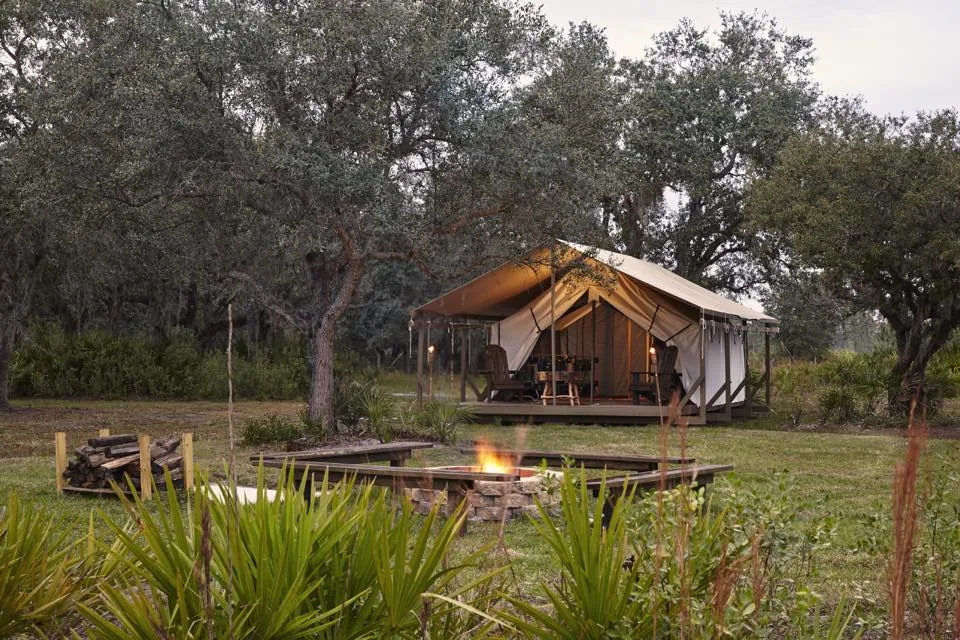
- With room to breathe. Leave space for a deck, fire ring, picnic table and parking at each site, and follow your local fire separation rules.
- With accessibility in mind. A ramp and a level deck make at least one unit accessible; ADA-compliant options are available.
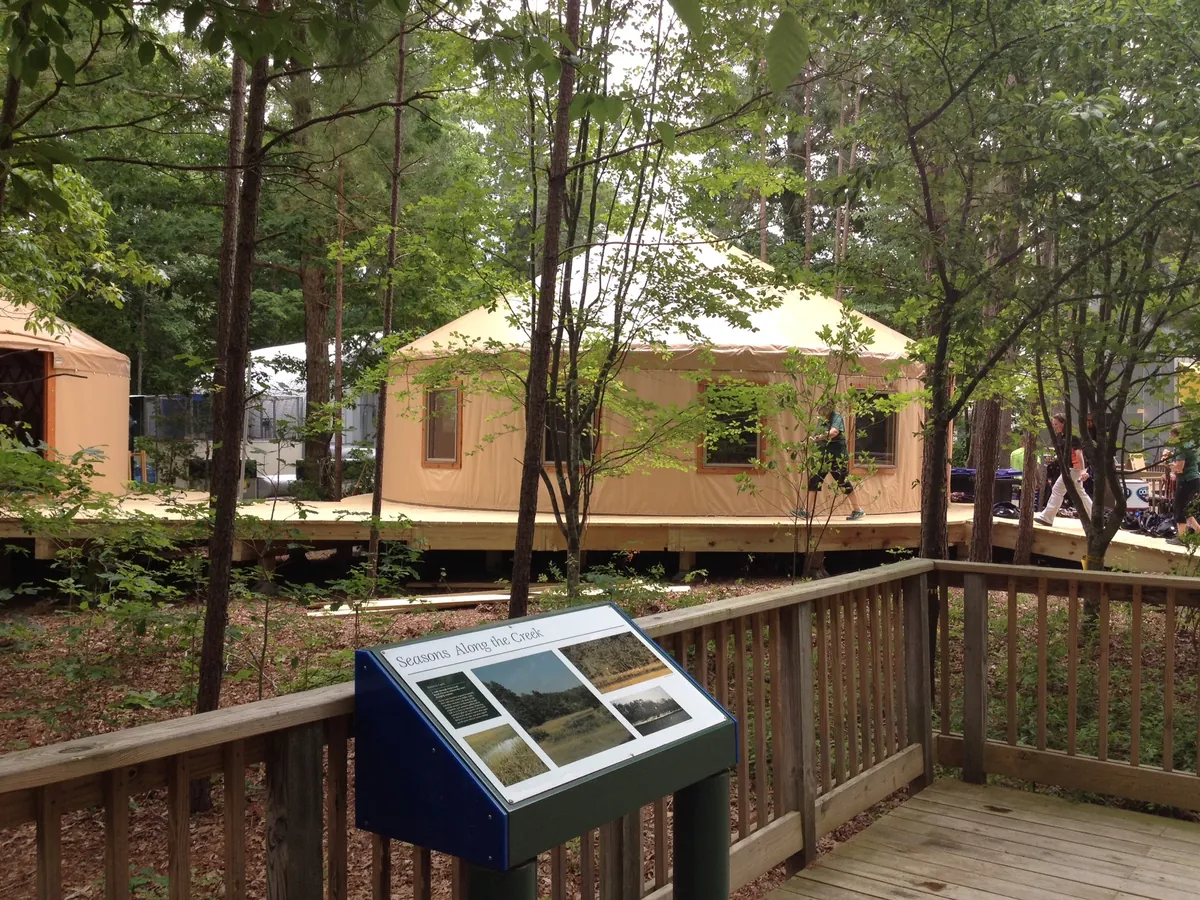
What Utilities Do Campground Yurts Need?
Campground yurts can be as simple or as complete as your guests expect. Most operators pick one of three levels:
| Level | What's inside | Good fit |
|---|---|---|
| Rustic | Beds, lighting by lantern or solar, guests use the bath house | Lowest cost, summer use |
| Powered | Outlets, lights and a heater or fan, guests use the bath house | Most campgrounds, longer season |
| Full-service | Power, water, a bathroom and a kitchenette | Premium rates, year-round stays |
Power and plumbing can run up through the platform, so planning the platform and utilities together saves money. For heat, a properly sized and vented stove or an electric heater keeps a yurt comfortable; see our guides to yurt insulation, yurt wood stoves and four-season yurt living. Shared common buildings, such as check-in, showers, kitchens and gathering spaces, can be yurts too.
What Kind of Platform Does a Campground Yurt Need?
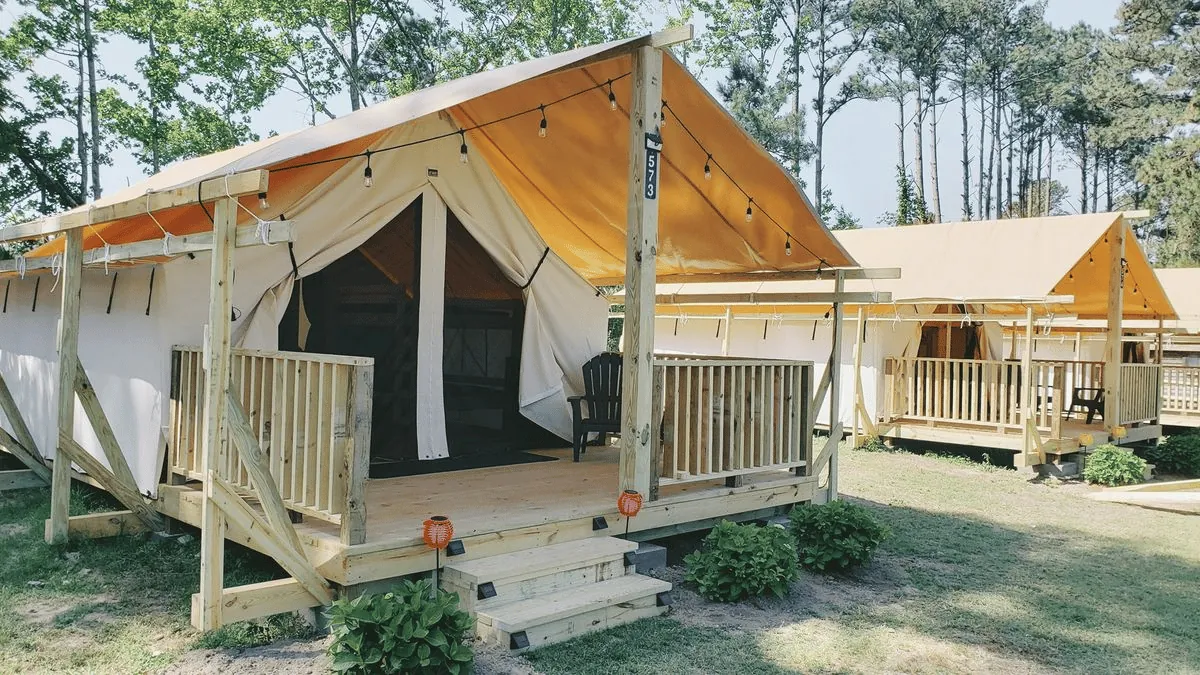
Every yurt and canvas tent sits on a level platform or deck. A raised wood deck is the most common choice because it protects the floor from moisture, handles slopes and gives guests outdoor living space. Plan for:
- A platform sized to the structure's diameter or footprint, plus a porch.
- Footings or piers suited to your soil, frost depth and slope.
- Chases for power and water before the decking goes on.
- Steps or a ramp, railings where required, and lighting.
Secret Creek offers free yurt deck plans and tent deck plans, and our platform and foundation guide explains the options in detail.
How Should You Price Campground Yurts and Tents?
Price from local evidence, not national averages. Rates depend on your location, season, amenities and guest, so build your rate this way:
- List 8 to 12 comparable stays within a reasonable drive: cabins, other glamping sites and nearby lodging. Note nightly rates by season and what is included.
- Place your unit in that range based on its amenities (power, heat, private bathroom), size and view.
- Run the formulas. Booked nights = available nights × your occupancy estimate. Revenue = booked nights × average nightly rate. Payback = total installed cost ÷ annual net income per unit.
- Test three cases (slow, expected and strong) before you commit to a unit count.
Count the full installed cost per unit: the structure and options, platform, utilities, furnishings, permits, shipping and installation. If you need help funding the project, Secret Creek offers financing options through third-party lenders.
Do Campground Yurts Need Permits?
Usually, yes. Overnight rental units are commercial lodging in most places, so expect zoning review and often building, health and fire approvals. Requirements vary widely by county and state. Contact your local building and planning departments early with your site plan and unit count. Secret Creek provides stamped engineering, wind and snow load documentation, permitting support, site planning guidance and detailed installation manuals to help. Our yurt permits and building codes guide and snow load and wind rating guide walk through the process.
How Long Does It Take to Add Yurts to a Campground?
The structures are rarely the slowest part. Permits, platforms and utilities usually are. A typical timeline looks like this:
- Planning and permits: often the longest step, so start first.
- Yurt production: typically 6 to 10 weeks.
- Canvas tent production: typically 4 to 6 weeks, longer during the busy March through July season, plus about 3 to 5 business days of shipping.
- Platforms and utilities: build while the structures are being made.
- Installation: most units go up in 2 to 3 days; most tents in 1 to 2 days; tipis in a few hours.
To open for spring or summer, order in the fall or winter.
How Do Real Campgrounds Use Yurts and Tents?
Secret Creek structures are in campgrounds, parks and camps across North America. A few examples from our customer stories:
- An RV park added two safari-style platform tents at the edge of the property, close to the bath house, to reach guests without an RV or gear. Read the RV park and campground story.
- A state park system rents yurts in two settings: a remote area beside mountain bike trails and a campground loop where yurt guests stay near friends in trailers and tents. Both draw return visitors. Read the state park yurts story.
- A camp built its bunkhouses from yurts, choosing two 27' and two 30' yurts, and keeps finding new uses for them. Read the camp yurts story.
Campground Yurt Checklist
- Define the guest you want to reach and the season you will operate.
- Price 8 to 12 local comparable stays.
- Confirm zoning, permits and fire rules for overnight units.
- Choose your mix of yurts, canvas tents and tipis, and their sizes.
- Pick sites near services, facing views, grouped for utilities.
- Decide the utility level for each unit.
- Plan platforms, decks and at least one accessible unit.
- Run revenue and payback formulas in three cases.
- Order early so structures arrive when platforms are ready.
Ready to plan your sites? Explore our campground solutions, price units in the Yurt Builder, Tent Builder or Tipi Builder, compare yurt kits, or request a consultation with a Sales Guide at 970.240.2111. Secret Creek has handcrafted yurts, tipis and canvas tents since 1976.
Frequently Asked Questions
Are yurts a good investment for a campground?
They can be. Yurts create a premium site that reaches guests without RVs or gear, install in days on a platform and last for decades with proper care. Confirm local demand and rates with comparable stays before you buy.
What size yurt is best for a campground?
A 16' (201 sq ft) or 20' (314 sq ft) yurt suits couples, and a 24' (452 sq ft) suits families. Larger 27' and 30' yurts work well as bunkhouses or common buildings.
How much does a campground yurt cost?
Secret Creek yurt kits start at $7,200 for a 12' and $15,195 for a 20', before options, platform, utilities, tax, shipping and installation. Canvas tents start at $1,750.
Do campground yurts need bathrooms?
No. Many campgrounds place yurts near the existing bath house. Premium units can add a private bathroom with plumbing run through the platform.
Can campground yurts be used in winter?
Yes. Insulated yurts with a snow and wind kit and a heat source are built for four-season use, which lets a campground extend its season.
How long does it take to install a yurt at a campground?
Most units install in 2 to 3 days once the platform is ready. Production typically takes 6 to 10 weeks, so order well before your opening date.