
Quick answer: A backyard yurt is a round, fabric-covered structure set up on a deck in your yard to serve as a home office, art or music studio, guest room, yoga space or quiet retreat. For one person working or creating, a 12' yurt (113 sq ft) is usually enough; for a guest room with a bed and sitting area, or a studio with room to move, most people choose a 16' yurt (201 sq ft). Secret Creek kits start at $7,200 for the 12' and $12,270 for the 16', before the platform, insulation, utilities, shipping and installation. With a level deck ready, a small crew can typically assemble one in 1 to 3 days.
Backyard yurts appeal to homeowners who want extra space without a home addition. The round shape, open floor and skylight dome make a small footprint feel larger than a boxy shed of the same size. This guide covers sizes, uses, costs, permits, comfort and setup so you can plan a backyard yurt that works all year.
What Is a Backyard Yurt?
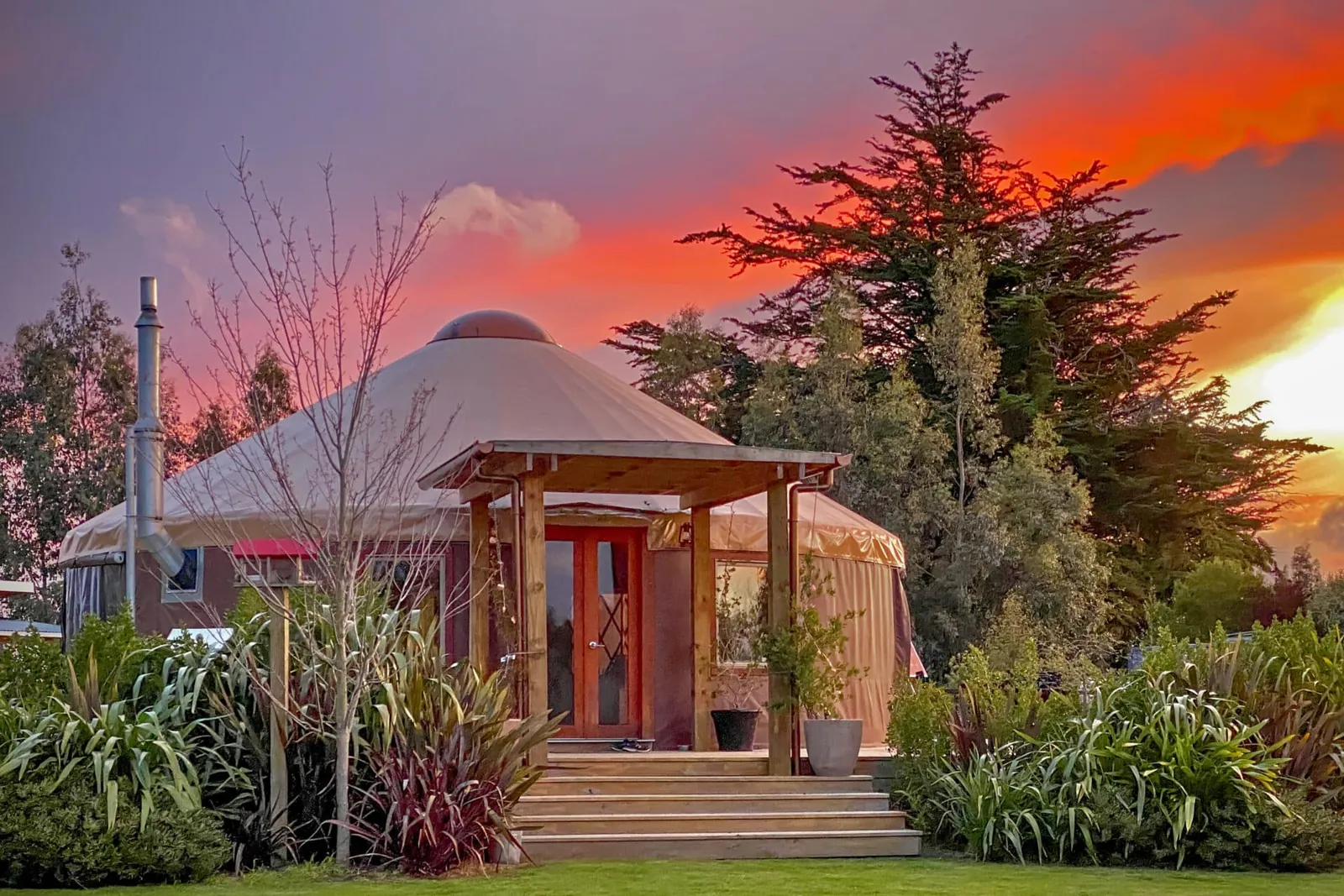
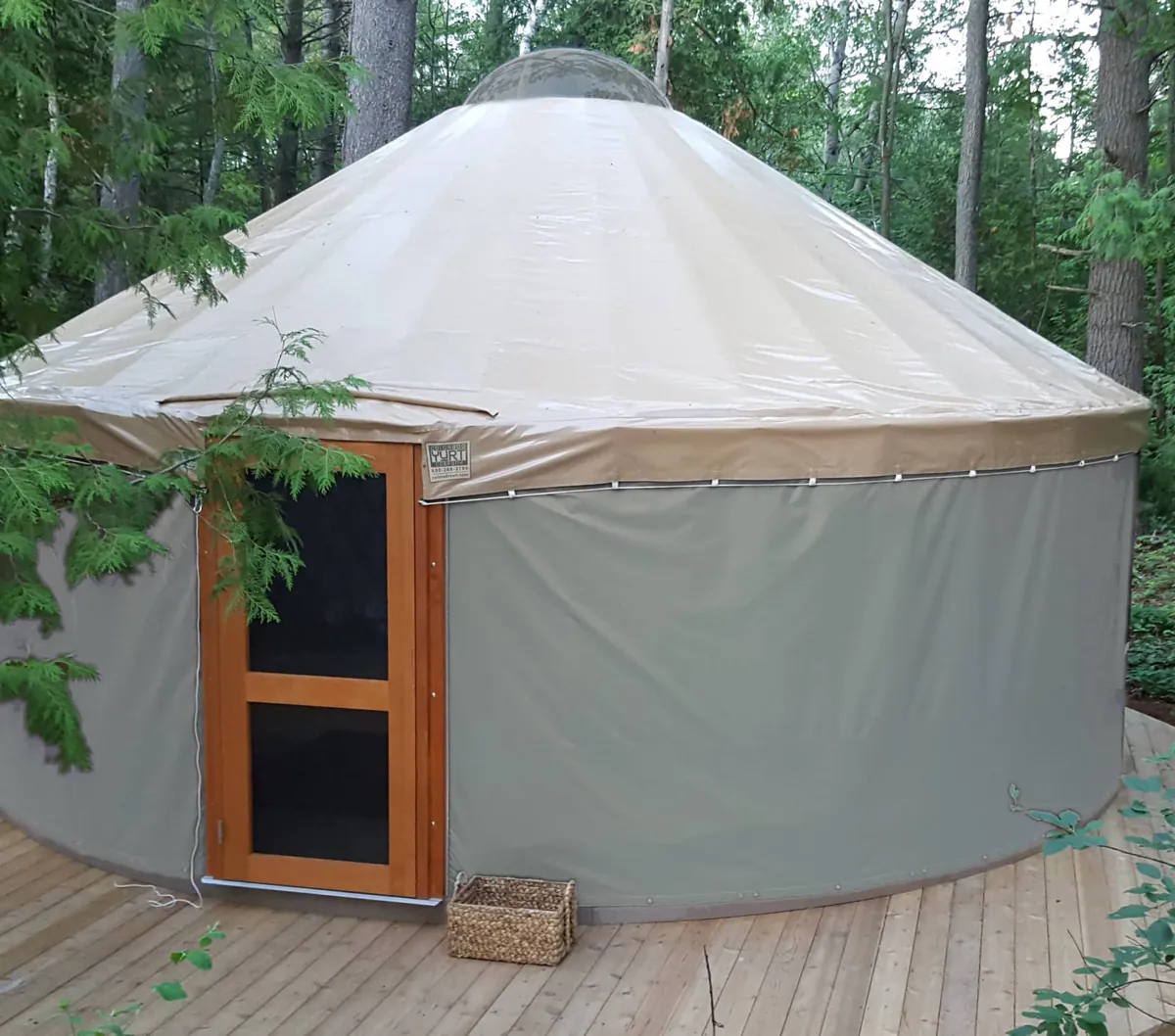
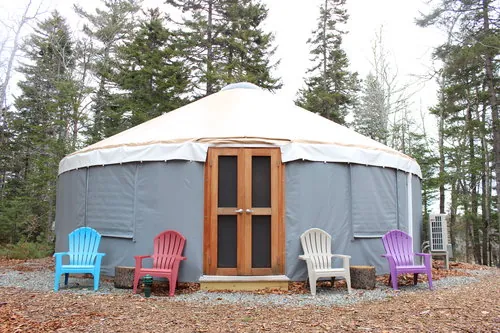
A backyard yurt is a modern yurt used as an accessory structure on a residential lot. It has the same parts as any yurt: a wood lattice wall, roof rafters that rise to a center ring, a skylight dome, a framed door and architectural fabric covers. What makes it a "backyard" yurt is its role. It sits a short walk from the main house and adds a dedicated room for a specific purpose.
Unlike a pop-up tent, a quality yurt is built to stay up through the seasons. Unlike a stick-built studio, it arrives as a kit, goes up quickly on a platform and keeps a lighter footprint on your yard. To learn how the parts work together, see what yurts are made of and our guide to yurt kits.
What Can You Use a Backyard Yurt For?
The open, round interior has no posts in the middle, so you can arrange it however you like. The most popular backyard uses are:
- Home office: A detached office separates work from home life. A desk under a window, a reading chair and shelving fit comfortably in a 12' yurt.
- Art, craft or music studio: Light from the dome and windows is ideal for painting and crafts. The round shape gives musicians a pleasant, open sound.
- Guest room: A queen bed, a small seating area and a wardrobe fit well in a 16' yurt, giving visitors privacy without taking over the house.
- Yoga, meditation or fitness space: The clear floor and calm round room make yurts a natural fit for movement and mindfulness.
- Teen hangout, reading nook or kids' play space: A separate space that still sits within sight of the house.
- Accessory dwelling unit (ADU): Where local rules allow, a larger yurt with plumbing can become a full living space. See using a yurt as an ADU.
What Size Backyard Yurt Do You Need?
Start with how you will use the space and the largest piece of furniture it must hold. Floor areas below come from Secret Creek's kit sizes, and starting prices come from the Yurt Builder.
| Diameter | Floor area | Kit starting price | Best backyard uses |
|---|---|---|---|
| 12' | 113 sq ft | $7,200 | Home office, meditation room, reading retreat, small studio |
| 16' | 201 sq ft | $12,270 | Guest room, art or music studio, office with a daybed |
| 20' | 314 sq ft | $15,195 | Guest suite with sitting area, yoga or fitness studio, small ADU |
A few rules of thumb help:
- Office only: 12' gives room for a desk, chair, shelves and a heater.
- Office plus guests: 16' fits a desk and a daybed or sleeper sofa.
- Full guest suite or rental: 20' and up leaves room for a bed, seating and, where allowed, a bathroom. Our yurt bathroom guide covers what that involves.
Also check your lot. Measure the open area, then leave room for the deck to extend past the yurt wall, a landing or stairs at the door, and any required setbacks from property lines. For layout ideas by size, see yurt floor plans and the yurt sizes guide.
How Much Does a Backyard Yurt Cost?
Plan your budget in layers. The kit is the core, and these items are commonly added:
- Yurt kit: $7,200 for the 12', $12,270 for the 16' and $15,195 for the 20' as starting prices. Doors, windows, colors and other options are added in the Yurt Builder.
- Insulation: EcoFoil kits start at $1,385 (12') and $1,840 (16'); Prodex kits, with R-22 walls and an R-44 roof, are $2,515 (12') and $3,130 (16'). See yurt insulation for how to choose.
- Platform: A wood deck you build yourself or have built, or the insulated SIPs platform option at $2,750 (12') or $5,620 (16').
- Heat and power: An electric heater, mini-split or wood stove, plus wiring by a licensed electrician.
- Delivery and setup: Shipping, plus installation if you don't assemble it yourself.
- Permits and site work: Fees vary by jurisdiction; site prep depends on slope and access.
Prices change, so confirm current figures in the Yurt Builder or with a Sales Guide. Many buyers compare these totals to other options in yurt vs. cabin costs.
Do You Need a Permit for a Backyard Yurt?
It depends on where you live, the size of the yurt and how you will use it. Many U.S. jurisdictions follow the International Residential Code, which lets local governments exempt small one-story detached accessory structures, such as sheds and playhouses, from a building permit below a set floor area. Some places use 200 sq ft, and many use a smaller limit such as 120 sq ft. A 12' yurt at 113 sq ft falls under both of those common thresholds, but an exemption is never automatic.
Expect stricter review when the yurt:
- Has electrical wiring, plumbing or a wood stove (these usually need their own permits even when the structure does not)
- Will be used for sleeping, a guest room or a rental
- Is larger than your local exemption size
- Sits on an elevated deck that needs railings or engineered footings
- Is subject to HOA covenants or historic district rules
Call your local building and zoning departments before you order, and ask about setbacks, height limits, size exemptions and whether a sleeping space changes the classification. Our step-by-step guide to yurt permits and building codes lists the documents and questions to bring.
What Kind of Platform Does a Backyard Yurt Need?
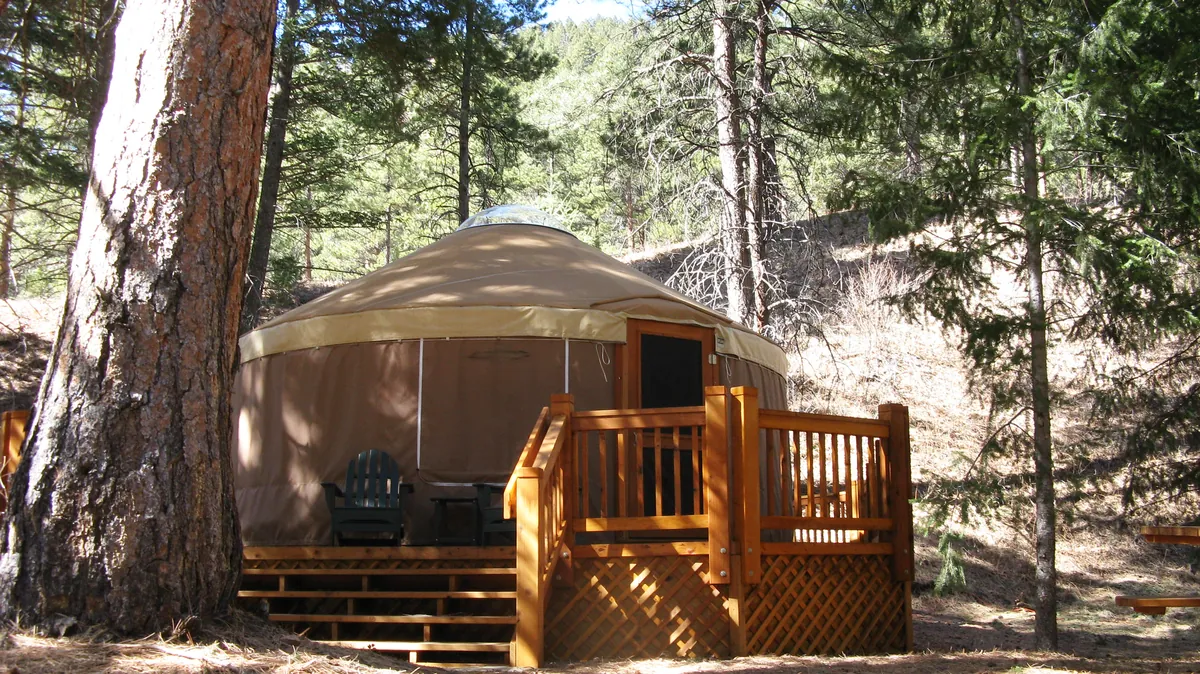
Every yurt needs a level, solid floor. In a backyard that usually means a wood deck on piers or footings, sized slightly larger than the yurt diameter so the wall sits fully on the deck with a small margin. A deck keeps the floor dry, gives you a place for stairs and a porch, and makes it easier to run wiring underneath.
Secret Creek provides free deck plans and materials lists for 16' to 30' yurts, and the yurt platform and foundation guide compares deck, SIPs and slab options. On a sloped yard, an elevated deck with stairs often costs less than regrading.
Can You Use a Backyard Yurt Year-Round?
Yes, when it is set up for your climate. Four things make the biggest difference:
- Insulation: Insulated walls and roof keep heat in during winter and reduce heat gain in summer. Add an insulated floor or SIPs platform for cold climates.
- Heat and cooling: Small yurts heat quickly. An electric heater or mini-split suits an office; a wood stove suits a retreat or guest space. Follow the stove maker's clearances.
- Ventilation: Opening windows and a venting dome let warm air escape and reduce condensation.
- Load rating: In snowy or windy areas, choose a load package that meets your local design requirements. Learn more in yurt snow load and wind ratings.
How Do You Make a Backyard Yurt a Great Office or Studio?
A few planning choices make a small yurt work hard every day:
- Plan power early: Decide where your desk, lights and heater go before wiring, and add enough outlets so you don't rely on extension cords.
- Get internet out there: A mesh Wi-Fi node or a buried network cable usually gives a more reliable connection than a distant router.
- Control the light: Place your desk so screens face away from bright windows, and add shades for afternoon sun. The dome provides soft overhead light.
- Use the round walls well: Freestanding furniture, low shelving and rolling storage fit curves better than tall built-ins.
- Soften the sound: Rugs, curtains and upholstered furniture absorb echo, which helps for video calls and music.
For furnishing ideas, browse inside a yurt and our yurt photo gallery.
How Long Does It Take to Set Up a Backyard Yurt?
Once the platform is built and level, most Secret Creek yurts can be assembled in 1 to 3 days by a small crew following the installation guide. A typical project runs in this order:
- Confirm zoning, permits and HOA approval.
- Choose size, doors, windows, insulation and load package in the Yurt Builder and request a quote.
- Build the deck or platform while the yurt is being made.
- Run electrical rough-in under the deck if needed.
- Assemble the lattice wall, door frame, rafters and ring, then add insulation and covers.
- Install heat, lighting and furnishings, and schedule any final inspections.
Is a Backyard Yurt Better Than a Shed or Prefab Studio?
Each has a place. A storage shed is the cheapest way to hold tools, but few are designed to be pleasant places to spend a workday. A framed prefab studio can feel like a small house but often costs more and takes longer to permit and build. A backyard yurt sits between them: it is designed for people, with windows, a dome, insulation options and a large open floor, and it goes up in days once the deck is ready. If you want a space that feels different from the house, a yurt delivers that in a way a box does not.
Frequently Asked Questions
What size yurt is best for a backyard office?
A 12' yurt (113 sq ft) fits a desk, chair, shelving and a heater for one person. Choose a 16' yurt (201 sq ft) if you also want a daybed, a second workstation or room for clients.
How much does a backyard yurt cost?
Secret Creek kits start at $7,200 for a 12' yurt and $12,270 for a 16' yurt. Insulation, a platform, heat, electrical work, shipping, installation and permits are added on top, so get a full quote before you budget.
Do I need a permit for a small backyard yurt?
Possibly. Many places exempt small accessory structures below a set size, often 120 or 200 sq ft, but electrical work, sleeping use or a rental usually triggers review. Always check with your local building department first.
Can I sleep in a backyard yurt?
Yes, many owners use a backyard yurt as a guest room. Local rules may treat a sleeping space differently from an office, with requirements for egress, smoke alarms or ADU approval, so confirm before you furnish it as a bedroom.
Can a backyard yurt be heated in winter?
Yes. With insulation and an electric heater, mini-split or wood stove, a backyard yurt can be comfortable through cold weather. Good ventilation helps manage condensation.
Can I put up a backyard yurt myself?
Many homeowners do. With a level deck ready, a small crew can typically assemble a Secret Creek yurt in 1 to 3 days using the installation guide. Hire licensed trades for electrical and plumbing work.
Next Steps
Ready to plan your backyard yurt? Price a 12' or 16' yurt in the Yurt Builder, compare complete yurt kits, read our yurt FAQ, or request a consultation with a Sales Guide at 970.240.2111 to talk through size, insulation and platform options for your yard.