
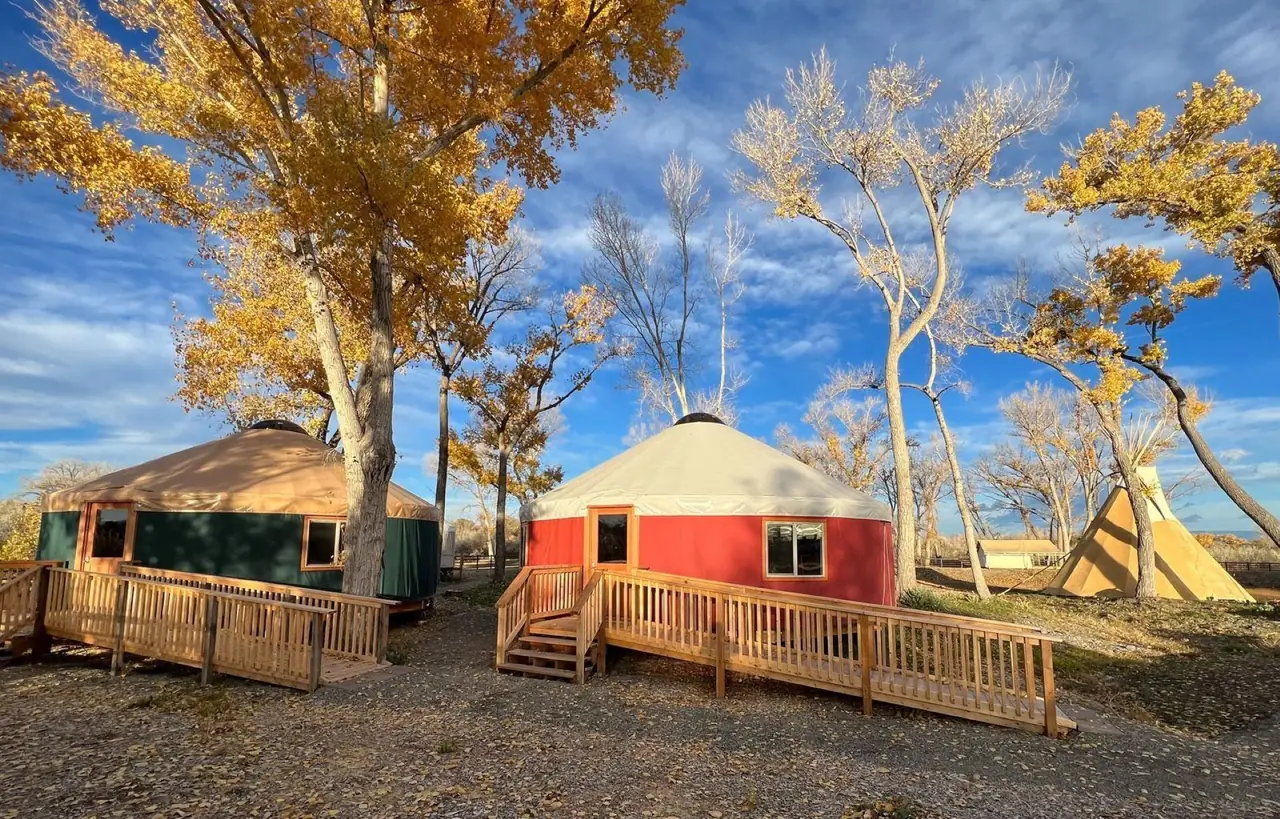
Quick answer: A fabric yurt has a wood lattice wall and rafter frame wrapped in architectural fabric covers, while a hard-sided yurt (often called a wooden yurt or yurt cabin) replaces the fabric walls with rigid wood or panel walls and usually a conventional roof. Fabric yurts are lighter, quicker to raise on a finished platform, bright inside and closest to the traditional round yurt. Hard-sided yurts feel more like a small cabin, are quieter in wind and take longer to build. Both can work year-round when they are insulated and engineered for local snow and wind. Choose fabric if you want speed, light, a true yurt experience and simpler construction; consider hard-sided if you want cabin-style walls and are prepared for a longer, more conventional build.
Shoppers often compare the two styles before they compare companies, sizes or options. Secret Creek builds fabric yurts, so we explain where fabric shines and where a hard-sided design may be the better fit for some buyers.
What Is the Difference Between a Fabric Yurt and a Hard-Sided Yurt?
The difference is the wall and roof skin, and how much of the structure is built on site.
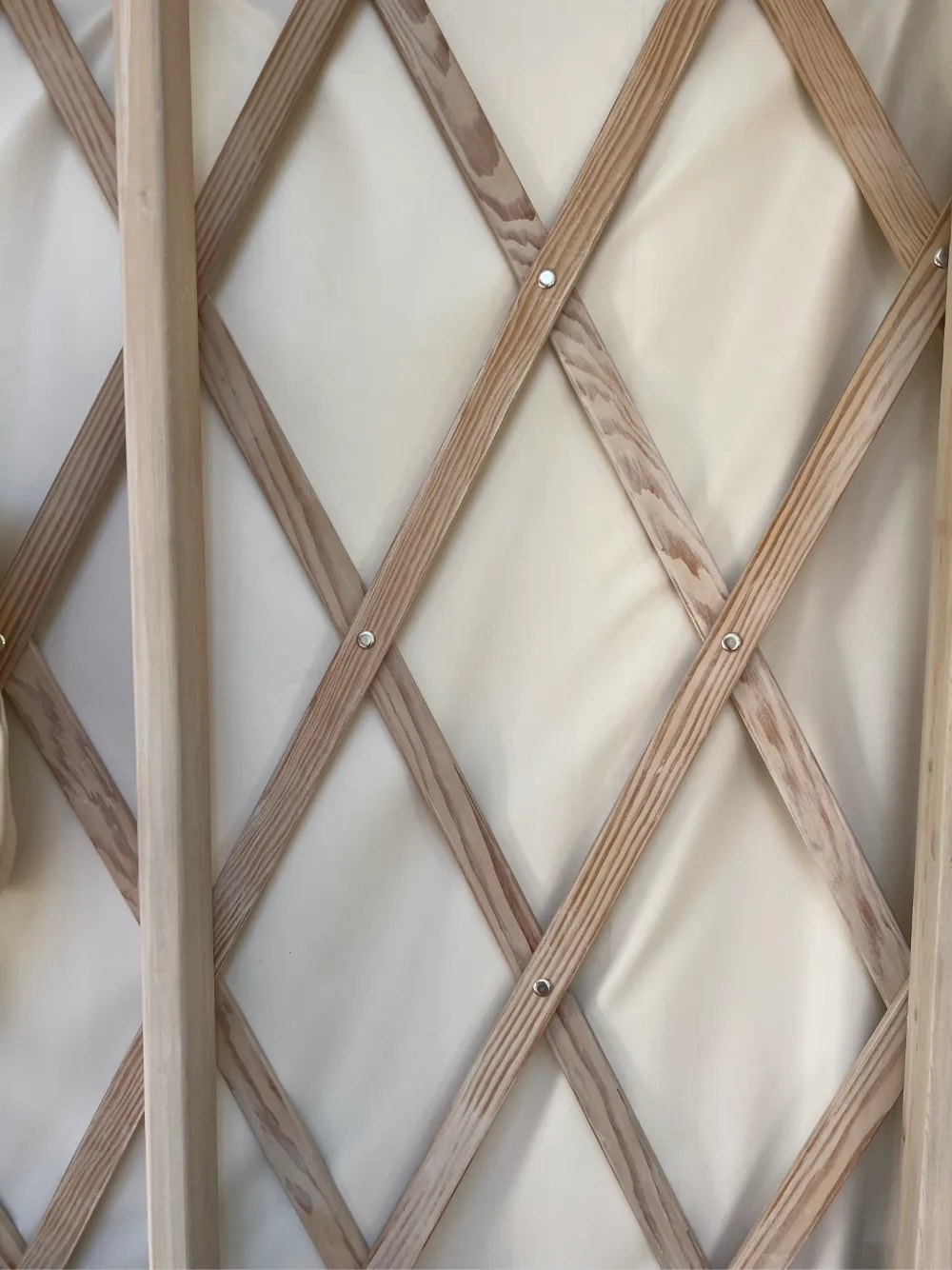
- Fabric yurt. An expandable wood lattice wall, wood rafters and a center compression ring form the frame. Fabric roof and wall covers are stretched over it, and a tension cable at the top of the wall holds the lattice in a circle. The roof and walls brace each other, so there are no interior posts.
- Hard-sided yurt. The round or many-sided footprint stays, but the walls are rigid: wood framing, wood siding or prefabricated panels. The roof is typically framed and sheathed with conventional roofing over it.
Both types sit on a raised wood deck, a concrete slab or an insulated panel platform, and both can be finished with windows, doors, insulation, plumbing and electricity. For a full breakdown of fabric yurt components, see what yurts are made of.
How Is a Fabric Yurt Built?
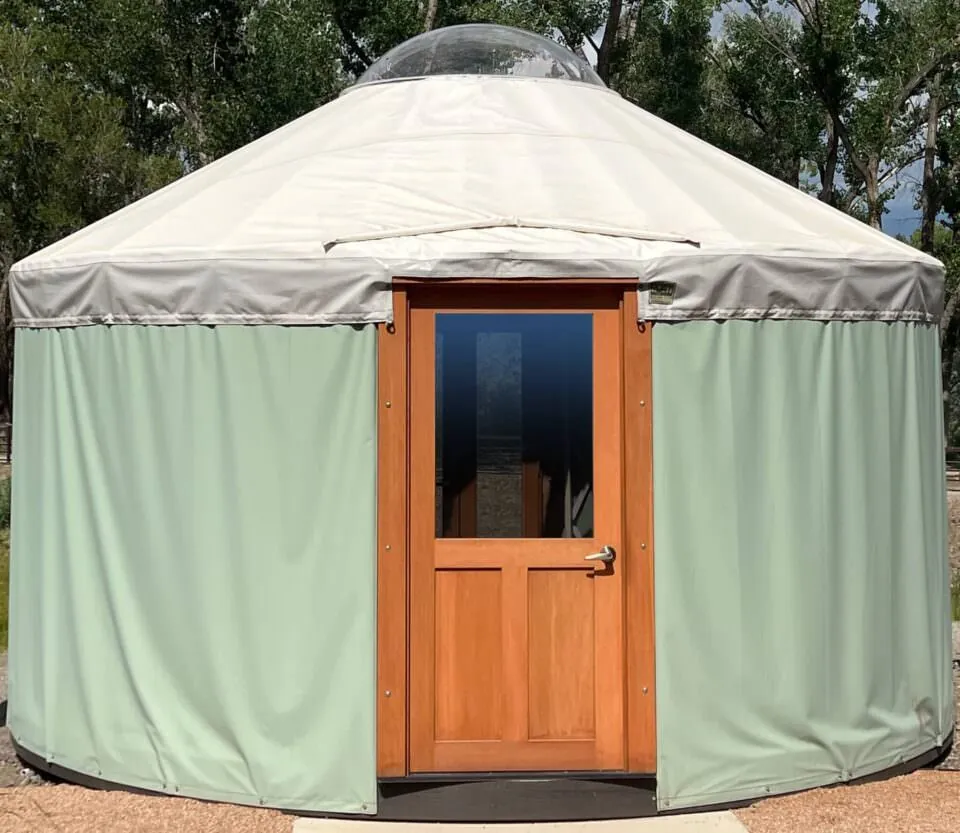
A fabric yurt is a kit of engineered parts that assemble on a finished platform. Every Secret Creek yurt kit includes lattice wall sections, roof rafters and the top ring, canvas roof and wall covers, and a door frame and door. A dome skylight is included on 20' and larger kits, and a snow and wind kit is included on the 24', 27' and 30'.
- Frame. Secret Creek frames use kiln-dried solid wood with mortise-and-tenon joinery in the lattice and rafters. Lattice comes in a standard redwood stain, with natural and white wash stains available.
- Covers. The frame is wrapped in marine-grade architectural fabric, with a DuroLast vinyl roof membrane over the roof, fabric wall covers and a valance at the eave that helps shed water away from the wall. Roofs come in gray, tan or white, and walls come in ten colors, from Adobe and Sage to Storm and Timber.
- Openings. Fabric windows with bug netting and removable insulation panels, a rollup wall, vinyl-clad sliding glass windows, a Douglas fir glass casement window, and fiberglass or wood doors.
Because the parts are pre-built, a small crew can typically assemble a yurt on a ready platform in 1 to 3 days using the installation guide. Our yurt pitching and setup guide walks through the process.
How Is a Hard-Sided Yurt Built?
Hard-sided yurts vary more by builder, but most follow one of two approaches. Some use prefabricated wall and roof panels that bolt together on site. Others are framed on site more like a conventional building, with studs, sheathing, siding and a framed roof. Either way, the walls carry the roof directly, and the building is finished inside and out with materials you would recognize from a cabin.
That construction brings real advantages: rigid walls, conventional insulation cavities and a look that blends with cabins and homes. It also means more weight and site labor, so expect a hard-sided build to take longer than raising a fabric yurt, and to involve a contractor or an experienced builder for much of the work.
Which Is Better in Snow, Wind and Rain?
Both styles can handle hard weather when they are engineered for the site. The question is how each one gets there.
A fabric yurt resists snow and wind through its frame and tension. Rafter size, how the rafters connect to the ring and wall, cover tension and how the yurt is fastened to its platform all determine its real-world rating. Secret Creek offers three load packages:
- Base: 2"x4" rafters bracketed to the top ring.
- Wind: the base frame plus 2"x4" studs under each rafter.
- Snow and Wind: studs under each rafter plus 2"x6" engineered rafters for heavy snow.
A hard-sided yurt resists loads through its framing and sheathing, much like a small house. It is typically quieter in high wind, because rigid walls do not move the way fabric can, and heavy snow slides or sits on a conventional roof surface.
Rain is a matter of detailing in both. A fabric yurt sheds water with its vinyl roof membrane and eave valance, and a bender board at the deck edge keeps water away from the bottom of the wall. A hard-sided yurt relies on roofing, flashing and siding. Our guide to yurt snow load and wind ratings explains what the numbers mean and how to match them to your site.
Which Is Warmer: a Fabric or Hard-Sided Yurt?
A hard-sided yurt has deeper wall and roof cavities, so it can hold conventional insulation much like a cabin. That is its biggest comfort advantage in cold climates.
A fabric yurt uses insulation designed for the round frame, installed between the frame and the outer fabric:
- Base Insulation Kit (EcoFoil): single-bubble insulation that blocks up to 96% of radiant heat, a good fit for three-season use and mild climates.
- Upgraded Insulation Kit (Prodex): R-22 wall insulation and R-44 roof insulation, which helps meet many energy code requirements for year-round living.
- Floor and openings: an insulated floor such as Secret Creek's R-23 SIPs panels, a dome insulation cover and insulated windows or low-E glass.
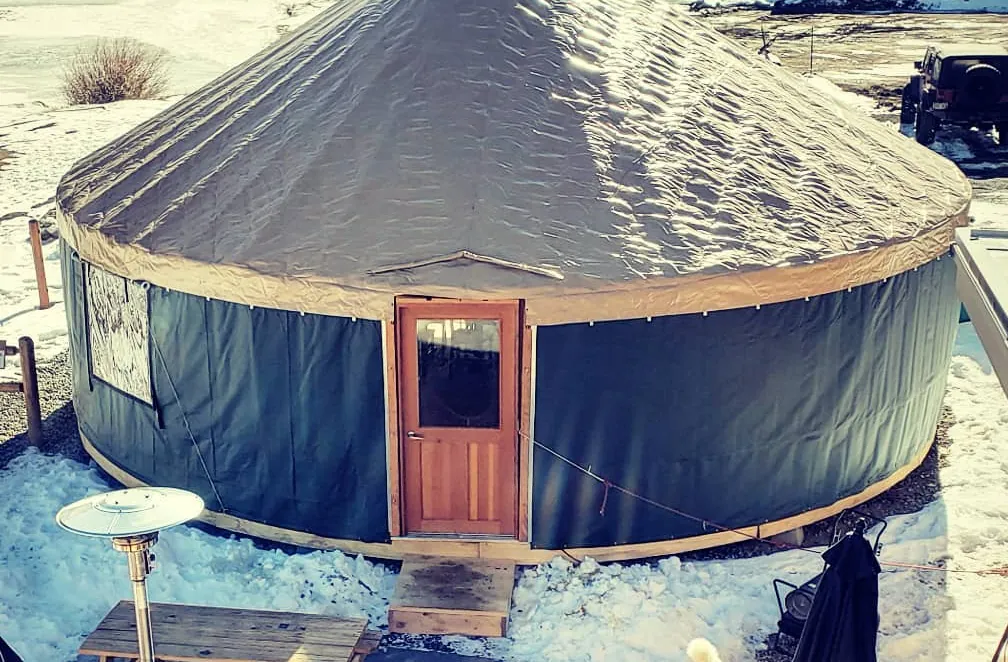
With roof, wall and floor insulation, a dome cover, a properly sized heat source and a snow and wind package where needed, people live in fabric yurts through cold, snowy winters. Read our yurt insulation guide and four-season yurt living guide for details, and our yurt condensation guide for keeping a well-sealed yurt dry.
How Do Light, Sound and Feel Compare Inside?
The inside experience is where the two styles differ most.
- Light. A fabric yurt glows. Daylight filters through light-colored covers and pours in through the dome. Hard-sided yurts depend on windows and skylights for daylight.
- Connection to the outdoors. With fabric windows, a rollup wall and an open dome, a fabric yurt feels close to nature, which is why it is the classic choice for glamping and retreats. A hard-sided yurt feels more enclosed and private.
- Sound. Rigid walls block more wind, rain and outside noise. A fabric yurt lets you hear rain on the roof, which many guests love and some light sleepers do not.
Browse real examples in our yurt interiors gallery, and see single-level layouts for each size in our yurt floor plans guide.
How Do Size Options Compare?
Hard-sided designs come in a range of diameters depending on the builder. Fabric yurts are sold by diameter. Secret Creek kits come in six sizes, from the yurt kits page:
| Diameter | Floor area | Common uses |
|---|---|---|
| 12' | 113 sq ft | Studio, office, single guest unit |
| 16' | 201 sq ft | Glamping unit for two, backyard retreat |
| 20' | 314 sq ft | Guest house, couples rental |
| 24' | 452 sq ft | Small home, family rental |
| 27' | 573 sq ft | Full-time home with kitchen and bath |
| 30' | 706 sq ft | Larger home, studio or gathering space |
Glass windows are not available on the 12' size, so plan on fabric windows if you choose the smallest yurt. The yurt sizes guide helps you match a diameter to how you will use it.
How Long Do Fabric and Hard-Sided Yurts Last?
A hard-sided yurt is maintained like a cabin: roofing, siding, paint or stain and caulking on their own schedules. A fabric yurt has two lifespans. The wood frame is built to last for decades, and the fabric covers are replaced over time. With proper care, covers typically last 10 to 15 years before they need replacement, depending on sun, snow and wind exposure.
Replaceable covers are an advantage: you can renew the weather skin, or even change colors, without rebuilding the structure. Secret Creek's first yurt, built more than 40 years ago, is still standing on its third set of covers. Our guide to how long yurts last covers durability in depth, and the yurt maintenance checklist lists the seasonal checks that extend cover life, like keeping covers tensioned and checking the tension cable.
Do Fabric and Hard-Sided Yurts Need Different Permits?
Requirements depend on your jurisdiction and how you will use the yurt, not just on the wall material. A yurt on a permanent platform used as a dwelling or rental is often reviewed as a permanent structure and may need engineered drawings, while some areas treat small seasonal structures differently. A hard-sided yurt is more likely to be reviewed like a conventional building from the start.
Either way, ask your local building department early what snow, wind and energy requirements apply, and choose load and insulation packages to match. Our yurt permits and building codes guide explains what to ask.
Which Is Better for Glamping and Rentals?
For most glamping sites, campgrounds and retreats, fabric yurts are the better fit. Guests book a yurt for the experience: the round room, the dome over the bed and the sound of rain on the roof. Fabric yurts also go up quickly on finished platforms, which shortens the time between building a site and taking bookings.
Hard-sided units can make sense where guests expect a cabin-style stay or where very heavy use calls for rigid walls. Many operators mix structure types. See our glamping yurts guide, campground yurts and yurt rental guide for planning a site.
How Do You Choose Between a Fabric and Hard-Sided Yurt?
Use these questions to narrow it down:
- How fast do you want to be in it? If you want to move in or open for guests soon after the platform is built, choose fabric.
- What experience do you want? Light, openness and a true yurt feel point to fabric. Cabin-style walls and quiet point to hard-sided.
- What is your climate? Both can handle snow and wind when engineered for the site. For a fabric yurt, plan the right load package and insulation upgrade.
- Who will build it? A fabric yurt kit is designed for a small crew with an installation guide. A hard-sided yurt usually needs more site labor.
- How will you maintain it? Fabric means periodic cover replacement on a long-lasting frame. Hard-sided means conventional roofing and siding upkeep.
- What will your county require? Check permits and loads before you buy either type.
If you are comparing builders as well as styles, our guide on how to choose a yurt company lists the questions to ask about materials, warranties and lead times, and yurt vs. tiny house compares yurts with another popular small-living option. When you are ready, build your yurt online or request a consultation with a Sales Guide.
Frequently Asked Questions
What is the difference between a fabric yurt and a wooden yurt?
A fabric yurt has a wood lattice and rafter frame covered with architectural fabric. A wooden or hard-sided yurt uses rigid wood or panel walls and usually a conventional roof. Fabric yurts are lighter and faster to raise; hard-sided yurts feel more like a round cabin.
Are fabric yurts warm enough for winter?
Yes, when insulated and heated. Secret Creek's upgraded Prodex insulation is rated R-22 in the walls and R-44 in the roof. Add an insulated floor, a dome insulation cover and a properly sized heat source for year-round living.
Can a fabric yurt handle heavy snow and high wind?
Yes, when it is engineered for the site. Secret Creek offers Wind and Snow and Wind load packages, and the snow and wind kit is included on 24', 27' and 30' yurts. Cover tension and secure anchoring to the platform matter too.
How long does a fabric yurt cover last?
With proper care, fabric covers typically last 10 to 15 years, depending on sun, snow and wind exposure. The wood frame lasts much longer, and covers can be replaced without rebuilding the yurt.
Is a hard-sided yurt better than a fabric yurt?
Neither is better for everyone. Hard-sided yurts offer rigid walls and a quieter, cabin-like interior. Fabric yurts offer faster setup, natural light, replaceable covers and the classic yurt experience that glamping guests seek.
How long does it take to set up a fabric yurt?
Once the platform is built, a small crew can typically assemble a fabric yurt in 1 to 3 days using the installation guide. A hard-sided yurt usually takes longer because more of it is built on site.